

Why summer furnace maintenance still matters for North Pole homeowners
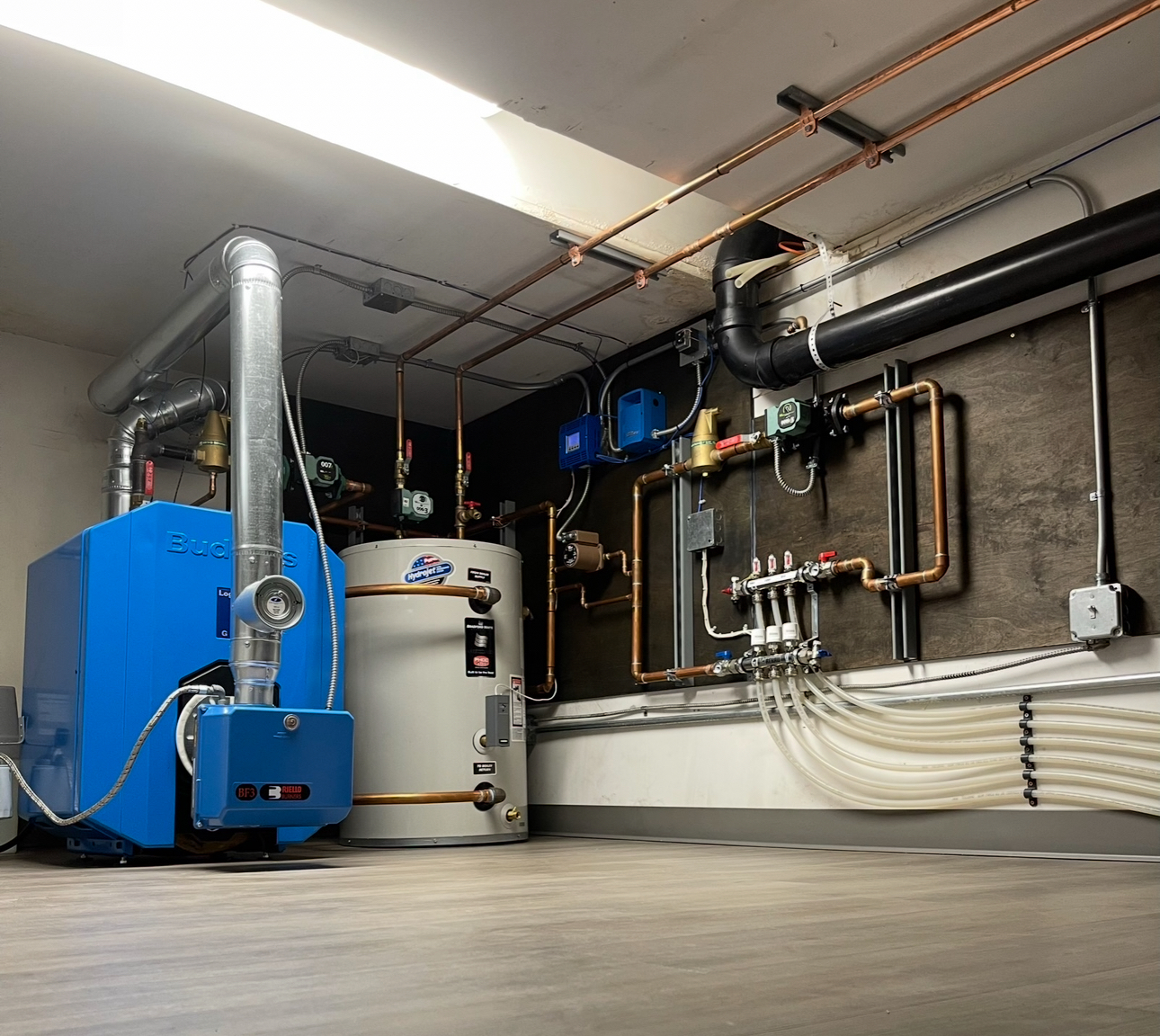
Summer in North Pole is short, and the last thing most homeowners are thinking about is their furnace. The system has been off or running minimally for a few months, nothing is broken, and furnace season feels like a distant concern. That reasoning is exactly why furnace maintenance scheduled in summer consistently produces better outcomes than maintenance rushed in October or skipped until something fails.Why summer furnace maintenance still matters in North Pole comes down to a straightforward combination of scheduling reality, system biology, and the specific demands that Interior Alaska winters place on heating equipment. A furnace that runs for eight or nine months of the year in temperatures that reach -40°F does not get the benefit of the doubt that a furnace in a mild climate does. It needs maintenance, and the timing of that maintenance determines whether it happens under favorable conditions or under pressure.According to ENERGY STAR, a yearly tune-up of your heating system can improve efficiency and comfort the same way a car tune-up improves fuel economy, and heating accounts for roughly 29% of a home's total annual energy cost.In this article, you will learn about:
- Why summer is actually the best time to schedule furnace maintenance in North Pole
- What a furnace accumulates during a long heating season that needs to be addressed
- The specific components that degrade fastest in Interior Alaska conditions
- What a summer maintenance visit covers and what it prevents
Keep reading to understand why the homeowners in North Pole who avoid mid-winter furnace emergencies are not lucky — they are the ones who scheduled service in July.
The scheduling reality that most North Pole homeowners ignore
The furnace maintenance that happens in October or November in North Pole is not scheduled maintenance. It is emergency-adjacent maintenance happening in competition with every other homeowner in the region who also waited. The U.S. Department of Energy identifies neglected maintenance as the leading cause of furnace failures, with dust buildup, blocked airflow, and worn components compounding quietly during months of inactivity. Technician availability contracts sharply when cold weather arrives, lead times for parts from suppliers outside Fairbanks increase, and the scheduling pressure of peak demand means that a non-emergency maintenance visit gets pushed behind actual breakdowns.Summer is when technician schedules are genuinely available, parts are accessible, and a maintenance visit can be thorough rather than rushed. A technician working on a furnace in July has the time to clean the heat exchanger properly, test combustion thoroughly, and identify a component that is showing early wear rather than simply addressing whatever obvious symptom prompted the call.The difference between a scheduled summer visit and a rushed fall visit is not just convenience. It is the quality of the inspection and the ability to order a part and install it at normal pricing rather than paying emergency rates for overnight shipping from Anchorage.
Why the off-season is when problems accumulate, not disappear
A furnace that has been running since September and finally stops running in April has been through one of the most demanding operating seasons in North America. Interior Alaska winters require continuous heating output for weeks on end, at conditions that stress every component in the system. Burners accumulate carbon deposits. Heat exchangers experience thermal cycling that can open hairline cracks over repeated seasons. Blower motors accumulate dust and debris that increase electrical draw and generate heat in the motor housing. Ignition systems wear incrementally with each start cycle.None of these accumulations heal during the summer. They sit exactly as they were when the furnace shut down in spring. A system that was running at 85% of capacity in April will still be running at 85% of capacity when it starts up in September, except now it has been sitting for five months and any moisture that worked its way into the cabinet has had the summer to encourage corrosion on electrical contacts and heat exchanger surfaces.Summer maintenance catches those accumulations and addresses them while the system is off, before they compound into a failure during the first serious cold snap of fall.
The North Pole scheduling crunch is worse than most markets
In most U.S. cities, furnace technician availability tightens in October and November but remains workable. In North Pole and the broader Fairbanks Borough, the scheduling window is narrower and the consequences of missing it are more serious. When a furnace fails in December in North Pole, it is not a cold house situation for a few days while waiting for a technician. It is a safety-critical situation where pipes can freeze and damage can cascade rapidly if the system is not restored quickly.That urgency creates a compressed repair timeline and premium pricing that a scheduled summer maintenance visit avoids entirely. A furnace repair call in July on a component showing early wear costs a fraction of what the same repair costs as an emergency call in January when the house is dropping toward 50°F and a technician is fitting the visit between three other no-heat emergencies that day. For homes where the furnace shares a mechanical room with a water heater or boiler, a water heater maintenance check bundled into the same visit adds no scheduling overhead and catches any cross-system issues in the same space.
What accumulates in a furnace during an Interior Alaska heating season
A North Pole furnace running from September through April operates for roughly 2,800 to 3,200 hours per heating season, depending on the severity of the winter. A furnace in Atlanta might run 800 to 1,000 hours per year. The differential means that components in North Pole heating systems accumulate wear at three to four times the rate of equivalent systems in moderate climates, and the maintenance interval needs to reflect that.
Combustion chamber and burner deposits
The combustion chamber and burners in a gas furnace accumulate carbon deposits from incomplete combustion over a long heating season. A thin layer of deposits is normal and manageable. A significant buildup changes the combustion characteristics of the burner, producing a yellow or orange flame rather than a clean blue one, increasing carbon monoxide output, and reducing the heat transferred to the heat exchanger per unit of gas burned.In North Pole, where a furnace may complete 15,000 to 20,000 ignition cycles over its lifetime and runs continuous long cycles during deep cold, combustion chamber deposits accumulate faster than in moderate-climate systems. A technician cleaning the burners and combustion chamber in summer removes those deposits before they affect the efficiency and safety of the next heating season.Signs that combustion deposits need attention include:
- Yellow or orange tinge to the burner flame instead of a solid blue
- Furnace that takes multiple ignition attempts before catching
- Slightly elevated carbon monoxide readings on detectors near the appliance
- Higher-than-expected gas consumption relative to the heating load
Heat exchanger stress and crack risk
The heat exchanger is the component that separates combustion gases from the circulated air in a forced-air furnace. A cracked heat exchanger allows carbon monoxide to enter the airstream and is the single most serious safety failure mode in a residential furnace. Heat exchangers crack because of repeated thermal cycling, restricted airflow that causes them to overheat, and the cumulative fatigue of long, hard heating seasons.The National Fire Protection Association reports that heating equipment is the second-leading cause of home fires in the United States, with failures in improperly maintained systems representing a significant share of those incidents. In a North Pole home where the furnace carries a heavy load for the majority of the calendar year, a degraded system is not a winter problem. It is a year-round cost and safety risk that compounds until someone addresses it.Regular maintenance is the primary mechanism for extending furnace service life and maintaining safe operation of heating equipment, a principle that applies everywhere but matters most in climates where the system runs as hard as it does in North Pole. Heat exchanger inspection is not a secondary item on the maintenance checklist here. It is the reason the technician opens the cabinet.A cracked heat exchanger found during a summer inspection means the repair or replacement happens in July at normal pricing with adequate time to source parts. A cracked heat exchanger found in December during a service call means a furnace that may need to be red-tagged and shut down while a family scrambles for temporary heat. For homes with boiler systems rather than forced-air furnaces, the equivalent critical component is the heat exchanger or fire tubes in the boiler, and the same logic applies: a boiler repair found during a summer inspection is a scheduled job, not an emergency.Heat exchanger inspection items that belong on a summer visit:
- Visual inspection for cracks, holes, or corrosion on all accessible surfaces
- Combustion analysis to detect CO in the airstream before and after the heat exchanger
- Airflow check to confirm the blower is delivering adequate flow to prevent overheating
- Inspection of the secondary heat exchanger in high-efficiency condensing furnaces
Blower motor and belt wear
The blower motor in a forced-air furnace runs every time the system heats, which in North Pole during winter means it runs for hours at a stretch over months of continuous operation. Bearings wear, dust accumulates on motor windings, and the capacitor that starts the motor ages toward failure. A blower motor running with worn bearings draws more current, generates more heat in the motor housing, and eventually fails entirely when the bearing seizes.A summer maintenance visit that includes motor bearing inspection, lubrication where applicable, and capacitor testing catches a motor that is in the later stages of its service life before it fails at the worst possible moment. A general heating repair that replaces a failing blower motor in August costs the motor and an hour of labor. A furnace that shuts down at -30°F because the blower motor seized costs the motor, emergency labor rates, and whatever happens to the house while it is without heat.
The components that degrade fastest in Interior Alaska conditions
Some components in a North Pole furnace face accelerated wear not just from long operating seasons but from conditions specific to Interior Alaska: extreme cold temperatures at startup, high humidity differentials, and the dusty conditions of Interior Alaska homes.
Ignition systems under extreme cold demand
Modern furnaces use either hot surface ignitors or spark ignitors to light the burner. Hot surface ignitors are silicon nitride or silicon carbide elements that glow to ignition temperature each time the furnace calls for heat. In North Pole during a deep cold spell, the furnace may cycle on and off dozens of times per day as it works to maintain setpoint temperature against a -40°F outdoor condition. Each ignition cycle puts the ignitor through a full thermal cycle from cold to over 2,500°F and back.Hot surface ignitors have a finite number of cycles before they crack or fail to achieve ignition temperature. In a North Pole furnace running through a hard winter, an ignitor may go through more cycles in a single season than an Atlanta furnace goes through in three. Summer maintenance that includes ignitor resistance testing identifies an element approaching the end of its service life before it fails to light the burner on a January morning.Ignition system items covered in a summer visit:
- Resistance check on the hot surface ignitor to assess remaining service life
- Inspection of the ignitor mounting for cracks or mechanical damage
- Flame sensor cleaning and testing to confirm proper flame detection
- Control board inspection for error codes logged during the prior season
Flue and venting condition after a long season
The flue and venting system that exhausts combustion gases from the furnace is subjected to condensation cycling throughout every heating season. In a high-efficiency condensing furnace, this condensation is managed through a drain system. In a standard mid-efficiency furnace, combustion gases carry moisture that condenses when they cool in the flue, contributing to corrosion in the flue liner and vent pipe over time.After eight months of operation, flue connections can loosen, corrosion can progress in older metal flue sections, and pipe insulation around cold vent sections may have degraded. Summer is the time to inspect the full flue run, confirm that all connections are tight and corrosion-free, and address any sections showing early deterioration. In North Pole homes where the outdoor temperature during winter can cause rapid condensation freezing in poorly insulated exhaust terminations, a compromised vent section can block the flue entirely and trigger a furnace safety shutoff on the coldest night of the year.
Filter and airflow management between seasons
The furnace filter accumulates dust, pet dander, and airborne debris throughout the heating season. A filter that was changed in September and never changed again may be significantly restricted by April, forcing the blower to work harder to move adequate air across the heat exchanger and increasing the risk of heat exchanger overheating.In North Pole homes, where road dust from unpaved roads and the fine particulate of Interior Alaska's dry winters contribute to higher-than-average airborne particulate, filters load faster than in most markets. A summer maintenance visit that includes filter replacement and duct inspection sets the system up for the next heating season with clear airflow rather than starting fall with a filter already partially loaded from the previous winter.Items related to airflow that belong in a summer visit:
- Filter replacement and assessment of the correct MERV rating for the home
- Visual inspection of supply and return ducts for disconnected sections or gaps
- Confirmation that all supply registers are open and unobstructed
- Blower wheel cleaning if dust accumulation is visible on the blades
What a summer furnace visit actually covers
A complete summer maintenance visit for a North Pole furnace is not a filter swap and a visual check. It is a systematic inspection and cleaning of every component that affects safety, efficiency, and reliability, conducted while the system is off and accessible without time pressure.A thorough summer visit includes the following:
- Heat exchanger visual inspection and combustion analysis
- Burner cleaning and combustion chamber inspection
- Ignitor resistance testing and flame sensor cleaning
- Flue and venting inspection for corrosion, gaps, and proper termination
- Blower motor inspection, lubrication, and capacitor testing
- Gas valve operation and gas pressure verification at the manifold
- Control board check for logged fault codes from the prior season
- Filter replacement and airflow assessment
- Safety control testing including limit switches and rollout switches
- Carbon monoxide measurement at the supply registers
That list covers the components that produce the majority of furnace failures in Interior Alaska homes. A furnace maintenance visit in summer that works through all of them gives the homeowner a clear picture of the system's condition before the heating season starts, not after the first cold night exposes a problem that has been developing since March.
The warranty argument for documented annual maintenance
Most furnace manufacturers require documented annual professional maintenance as a condition of warranty coverage for major components, including the heat exchanger. A heat exchanger warranty that covers 20 years is not unconditional. It applies to homeowners who can produce service records showing annual maintenance by a licensed technician.In North Pole, where replacing a heat exchanger in a major heating season versus having it covered under warranty is the difference between a significant repair bill and a parts-only cost, keeping that documentation current is worth more than most homeowners realize. A summer maintenance visit that produces a service record protects that warranty coverage for another year.
Pairing furnace maintenance with a whole-home plumbing check
A furnace technician and a plumbing technician in the same house on the same summer visit is more efficient than two separate appointments. Summer is the window when both the heating system and the plumbing system benefit from proactive service, and many of the access points, the mechanical room, the crawl space, the areas where pipes and duct runs share space, are the same locations.A membership plan that includes priority scheduling and annual maintenance visits for both plumbing and heating systems takes the scheduling burden off the homeowner and ensures both systems get their summer attention without separate coordination. A general heating maintenance appointment paired with a water heater and plumbing check in the mechanical room accomplishes more in a single visit than two reactive calls in October can.
Conclusion
Summer furnace maintenance in North Pole is not about fixing something that is broken. It is about ensuring that what has been through one of the most demanding heating seasons in the country is ready for the next one, before the scheduling window closes and the consequences of a failure become serious.The homeowners who call for emergency furnace service in January did not fail to maintain their systems because they did not care. They failed because they put it off past the window when maintenance was manageable, and the system made the decision for them.Summer is that window. The furnace is off, the schedules are open, and any problem found in July has time to be addressed properly.Prospector Plumbing and Heating serves North Pole, Fairbanks, and the surrounding Interior Alaska communities with same-day service and upfront pricing. Call us to schedule your summer furnace maintenance visit before fall demand makes the calendar tight.
Licensed & insured Alaska plumbing and heating. Locally owned and operated! We're the happiest plumbers in Alaska and go the extra mile on every job!
Fairbanks
135 32nd Avenue
Fairbanks AK 99701
North Pole
North Pole, AK 99705
Mat-Su Valley
1712 N Williwaw Way
#1 Wasilla, AK 99654
Eagle River
AK 99577