

When to schedule sewer inspections in Fairbanks for better plumbing performance
Your sewer line is buried underground, out of sight, and doing a job you probably do not think about until it stops working. But in Fairbanks, where freeze-thaw cycles shift the ground every year, where mineral-heavy water leaves deposits on pipe walls from the inside, and where root intrusion can quietly take hold in a cracked joint over a single growing season, the question is not whether your sewer line will eventually develop a problem.
It is whether you will catch that problem early enough to fix it on your terms. Knowing when to schedule sewer inspections in Fairbanks is the single most effective way to stay ahead of a system that gives almost no visible warning before a backup floods your basement.
The EPA estimates that at least 23,000 to 75,000 sanitary sewer overflows occur in the United States each year, not counting backups into individual buildings. Those overflows are driven by the same conditions that affect residential sewer lines: aging infrastructure, ground movement, blockages from grease and debris, and root intrusion through cracked or separated joints. The difference for homeowners is that your sewer lateral, the pipe running from your house to the municipal connection or septic system, is entirely your responsibility to monitor and maintain.
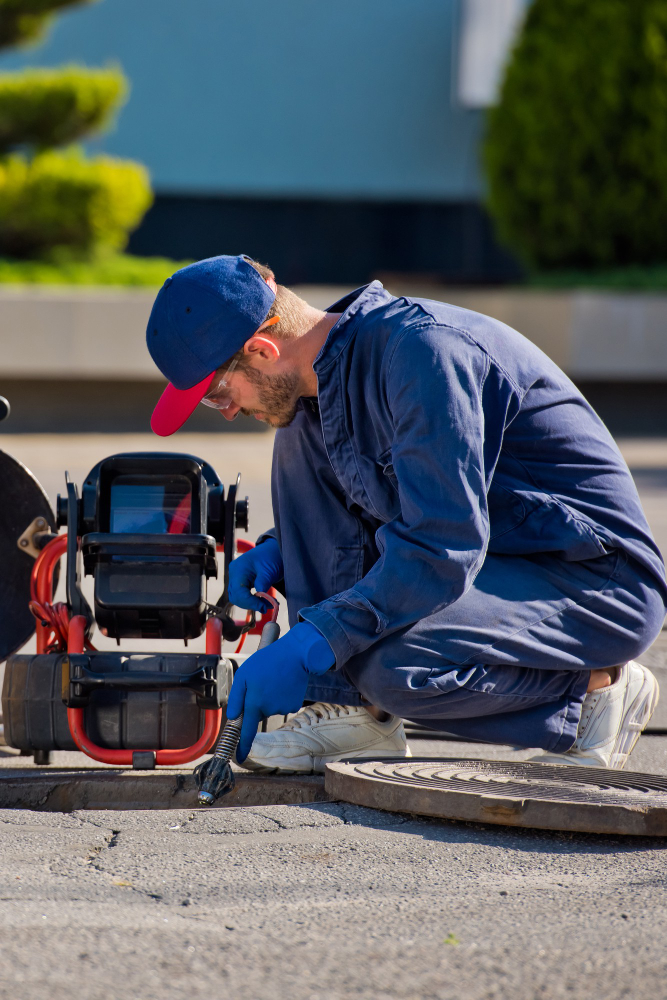
A camera inspection is the only reliable way to see what is happening inside that pipe without digging it up. It takes about an hour, costs a fraction of what a repair or emergency cleanup would run, and gives you a clear, documented picture of your line's condition. The hard part is knowing when to schedule one, because the right timing depends on your home's age, your line's history, and the specific conditions Fairbanks puts on underground infrastructure.
In this article, you will learn about:
- The seasonal timing that gives Fairbanks homeowners the most accurate inspection results
- The situations that should trigger an inspection regardless of your schedule
- How your home's age and pipe material affect inspection frequency
- What the camera actually reveals and how to use the findings
- Building an inspection schedule that fits your property
Keep reading to find the right inspection timing for your home and understand why getting eyes inside that pipe is the best investment you can make in your plumbing.
The best time of year to inspect a sewer line in Fairbanks
Timing matters more in Fairbanks than in most cities because the ground conditions change dramatically between seasons. An inspection done at the wrong time can give you an incomplete or misleading picture, while one done during the right window shows the true condition of the line when it matters most.
Understanding the seasonal dynamics helps you pick the window that gives you the most useful information and the most time to act on what the camera finds.
After breakup settles but before the ground dries completely
The ideal inspection window for most Fairbanks homeowners falls between late May and early July. At this point, the ground has thawed enough for any freeze-thaw damage from the winter to manifest. Joints that shifted, pipes that settled into new positions, and cracks that opened during the frost cycle are all visible on camera because the line is in its post-winter state.
Inspecting too early, while the ground is still actively thawing, can be misleading. Groundwater infiltration during breakup can make joints look worse than they are under normal conditions, and partially thawed sections of the line may be temporarily obstructed by residual ice or saturated soil. Waiting until the thaw is complete and groundwater levels have stabilized gives the camera a clearer view of the pipe's actual condition.
Inspecting too late, in the dry heat of August, can miss seasonal issues entirely. Root intrusion, for example, is most active during the growing season when trees and shrubs are drawing water aggressively. An inspection in early summer catches roots that have started their push into the line for the year, giving you time to address them before they grow large enough to cause a blockage.
Early fall as a pre-winter preparation step
If you missed the early summer window, early September is the next best option. The ground is still accessible, roots have had a full growing season to reveal themselves, and you still have time to schedule repairs before the freeze sets in.
A fall inspection also serves as a pre-winter baseline. If the camera shows the line is clean and structurally sound heading into the cold months, you have confidence that any problems that develop over the winter are new rather than pre-existing. If it reveals a developing issue, you can address it in the remaining warm weeks rather than discovering it as a midwinter backup when repair options are limited and expensive.
The one window to avoid is midwinter. Sewer line inspections in Fairbanks during the coldest months are not impossible, but they are complicated by frozen access points, the risk of equipment damage in extreme cold, and the difficulty of scheduling follow-up work if the inspection reveals a problem that needs excavation.
Connecting inspection timing to your maintenance calendar
For most Fairbanks homes, tying the sewer inspection to your annual plumbing maintenance visit makes the most sense logistically. If you already schedule a water heater flush and system check in late spring or early summer, adding a camera inspection to the same appointment keeps everything on one visit and gives your plumber a complete picture of the system's health.
The annual model works well for homes with older lines, a history of problems, or mature landscaping near the sewer path. For newer homes with PVC or ABS lines and no history of issues, every two to three years is a reasonable starting frequency, with the option to increase if conditions warrant it.
The situations that should trigger an inspection right away
Some circumstances override any routine schedule and call for an inspection as soon as you can get one booked. These are the warning signs and life events that mean your sewer line's condition is unknown and needs to be assessed before a small issue becomes a big one.
Waiting for the next scheduled inspection when any of these situations applies is gambling with your plumbing and your property.
Recurring slow drains that keep coming back after snaking
A drain that clogs once is a drain problem. A drain that clogs repeatedly, especially the main line, is a sewer line problem. When snaking clears a blockage and it returns within a few weeks or months, the obstruction is not the real issue. Something structural is happening in the pipe that is creating the conditions for the blockage to reform.
The three most common causes are:
- A belly or sag in the line where waste pools instead of flowing through, catching debris with every flush
- Root intrusion through a cracked joint, where the roots grow back after each snaking because the entry point is still open
- An offset joint where two pipe sections have shifted out of alignment, creating a lip that catches solids
None of these can be diagnosed from above ground, and none of them are fixed by snaking. A camera inspection pinpoints the exact location and type of defect, which determines whether the fix is a targeted repair, hydro jetting to clear buildup, or a section replacement.
Before buying or selling a Fairbanks home
A sewer line inspection should be part of every real estate transaction for homes over 20 years old, and honestly for newer homes too. Standard home inspections do not include a sewer scope, which means the condition of one of the most expensive components of the plumbing system goes completely unexamined unless someone specifically requests it.
For buyers, a clean camera report means one less unknown. A report showing problems gives you leverage to negotiate the price or request repairs before closing. For sellers, a pre-listing inspection demonstrates transparency and removes a common deal-breaker before it surfaces during the buyer's due diligence.
In Fairbanks, where freeze-thaw cycling, hard water, and ground movement create conditions that age sewer lines faster than in milder climates, the inspection is especially important for homes that have been in the ground for two or more decades. A line that looks fine from the outside can have significant internal deterioration that only a camera will reveal.
After a severe winter or an unusual freeze event
Not every winter is the same. Some years are mild enough that underground infrastructure comes through with minimal stress. Other years, like the winter of 2025-2026, push frost deeper and for longer than the system was designed to handle. After a severe winter, the odds of freeze-thaw damage to sewer line joints, offsets, and bellies go up significantly.
The University of Alaska Fairbanks Cooperative Extension Service recommends that if a sewer line freezes more than twice in one winter, it should be video-inspected to determine whether a structural issue is allowing water to pool and freeze. Even a line that did not freeze may have shifted enough during an extreme frost cycle to warrant a check.
If your home experienced any sewer issues during the winter, slow drains, backup events, gurgling sounds, or sewer odors, a post-thaw inspection is not optional. It is the only way to know whether the problem was temporary or whether the winter left permanent damage in the line.
When construction, landscaping, or excavation happens near the line
Any activity that disturbs the soil above or adjacent to your sewer line can affect the pipe beneath it. Heavy equipment crossing the line path, trenching for a new utility, planting a large tree, or even significant regrading can compress, shift, or damage a buried sewer pipe.
If you have had construction or landscaping work done near your sewer line's path, schedule an inspection afterward to confirm the pipe is intact. The same applies if a neighbor's project ran near your property line, since the sewer lateral often crosses areas that are close to or at the boundary between properties.
How your home's age and pipe material change the inspection equation
The recommended inspection frequency is not the same for every home. A newer home with modern pipe materials and a clean history needs less frequent monitoring than an older home with original clay or cast iron lines and decades of ground movement behind it.
Understanding what your line is made of and how old it is helps you set the right interval and avoid both under-inspecting and over-inspecting.
Homes built before 1980: annual inspections are worth the investment
Homes in this age range may have clay, cast iron, or Orangeburg sewer lines, all of which have known failure modes that become more likely with each passing year. Clay pipes crack under ground pressure and separate at mortar joints. Cast iron corrodes from the inside out, especially in Fairbanks where the USGS has documented elevated iron and mineral concentrations in the local groundwater. Orangeburg, a tar-paper product, simply deteriorates and collapses over time.
For homes in this category, annual camera inspections are the most cost-effective monitoring strategy. Each inspection builds on the last, creating a documented history that shows whether conditions are stable or deteriorating. That history helps your plumber make informed recommendations about when repair or replacement is necessary, rather than guessing based on the pipe's age alone.
Homes built between 1980 and 2005: inspect every two to three years
This era saw the transition to ABS and PVC plastic pipes, which resist corrosion and handle ground movement better than clay or iron. But plastic lines are not immune to problems. Joint separations from soil movement, bellies from improper bedding or settlement, and root intrusion at fitting connections all develop over time.
Inspecting every two to three years catches these conditions while they are still manageable. If any inspection reveals a developing issue, increase the frequency to annual until the condition is resolved or confirmed stable.
Homes built after 2005: start with a baseline and adjust from there
Newer homes with properly installed PVC or HDPE sewer lines are the lowest risk category, but they are not zero risk. Installation defects, settling of fill material under new construction, and root growth from recently planted landscaping can all affect a line within its first decade.
Schedule a baseline camera inspection around the five-year mark, then every three to five years afterward if the results are clean. If your property has large or fast-growing trees near the sewer path, shorten that interval. Root intrusion does not care how new the pipe is if the roots find a path in.
What the camera actually reveals and how to use the findings
A sewer camera inspection is not just a pass-fail test. The video footage and the technician's analysis provide a detailed map of your line's condition, section by section, that tells you not only what is wrong right now but what is likely to become a problem in the future.
Understanding what the camera shows helps you have a more productive conversation with your plumber and make smarter decisions about maintenance, repair, and replacement.
The most common findings in Fairbanks sewer lines
Every line is different, but the issues that show up most frequently in Fairbanks homes share common themes rooted in the local conditions.
The most common camera findings include:
- Root intrusion at joints, ranging from fine hair-like tendrils to thick root masses that fill a significant portion of the pipe
- Offset joints where frost heave or soil settlement has shifted pipe sections out of alignment
- Bellies or sags where a section of line has settled lower than the designed grade, creating a low spot where water and waste pool
- Mineral scale and buildup on the pipe walls, particularly in homes with hard well water
- Cracks or fractures in older clay or cast iron pipes
- Grease accumulation, especially in lines serving kitchens where cooking fats have entered the drain over years
Some of these findings call for immediate action. Others are conditions to monitor over time. Your plumber should explain each finding, its severity, and the recommended response, whether that is cleaning, repair, monitoring, or replacement.
Turning the inspection into a maintenance plan
The real value of a sewer inspection is not just knowing what the line looks like today. It is using that information to plan ahead. A line with minor root intrusion at one joint might benefit from annual hydro jetting to keep the roots in check. A line with a developing belly might need monitoring every year to see whether it is progressing. A line with significant offset joints and widespread corrosion might be approaching the point where full replacement is the most cost-effective path forward.
Each inspection adds a data point to your line's history. Over two or three cycles, your plumber can see whether conditions are stable, improving with maintenance, or trending toward a failure that should be addressed proactively. That pattern recognition is only possible when inspections happen on a regular schedule.
Keeping the video documentation
Ask your plumber for a copy of the inspection video and the written findings report. This documentation is valuable in several ways.
- It serves as a baseline for comparison with future inspections
- It supports insurance claims if a failure occurs and you need to demonstrate maintenance history
- It provides transparency during a real estate transaction, either as a seller demonstrating the line's condition or as a buyer verifying what was represented
- It helps a future plumber who may not have seen the line before understand its history and condition without starting from scratch
A good plumber provides this documentation as a standard part of the inspection. If they do not offer it, ask for it.
Building an inspection schedule that fits your Fairbanks property
There is no single inspection frequency that works for every home. The right schedule depends on a combination of factors specific to your property, your line's history, and the conditions it faces. Here is a framework for setting your initial frequency and adjusting over time.
A starting framework based on risk level
Your property falls into one of three general categories based on age, pipe material, and known risk factors.
- Higher risk (inspect annually): homes over 40 years old, homes with clay or cast iron sewer lines, properties with mature trees near the sewer path, homes with a history of backups or recurring slow drains, and any property that experienced sewer issues during the previous winter
- Moderate risk (inspect every two to three years): homes built between 1980 and 2005 with plastic pipe, properties with some trees near the line but no history of root intrusion, and homes on well and septic systems where the line carries all household waste
- Lower risk (inspect every three to five years): newer homes with confirmed PVC or HDPE lines, properties with no trees near the sewer path, and homes with a clean inspection history over multiple cycles
These are starting points. Move to a more frequent schedule if any inspection reveals a new finding, and relax the frequency if repeated inspections show a consistently healthy line.
Pairing inspections with other scheduled maintenance
The most efficient approach is to build the sewer inspection into your existing annual or biannual plumbing maintenance routine. When your plumber is already at the house for a water heater service, a drain check, or a seasonal plumbing inspection, adding a camera scope to the visit saves a second trip and gives the plumber context for the entire system rather than looking at one component in isolation.
For Fairbanks homeowners, the late spring or early summer maintenance window, after breakup but before peak summer, is the sweet spot for combining these services. You get the most accurate sewer inspection results, the most comfortable working conditions for outdoor and crawl-space access, and the most time to plan follow-up work if anything needs attention before the next freeze.
Adjusting based on what the camera finds
The best inspection schedule is a living document that evolves with your line's condition. After each inspection, discuss the findings with your plumber and agree on when the next check should happen.
If the line is clean and healthy, you can extend the interval. If it shows a new condition that is worth monitoring, shorten it. And if it reveals a problem that needs repair, the inspection itself has already paid for itself many times over by catching the issue before it caused a backup, property damage, or an emergency repair bill at the worst possible time.
Conclusion
A sewer line in Fairbanks takes more punishment than most homeowners realize. Freeze-thaw cycles shift the ground around it every year. Hard water deposits scale its interior walls. Roots push toward its moisture. And because all of this happens underground and out of sight, the first sign of a problem is often the last thing you want to see coming up through your floor drain.
Regular camera inspections are the simplest and most cost-effective way to stay ahead of that progression. They take about an hour, they cost a small fraction of what a repair or cleanup would run, and they give you documented, visual proof of your line's condition that you can track over time. The right schedule depends on your home's age, your pipe material, and your line's history, but the worst schedule is no schedule at all.
If your sewer line has never been inspected, or if it has been more than two years since the last one, schedule a camera inspection before the current season ends. Prospector Plumbing and Heating serves Fairbanks and North Pole and can scope your line, walk you through the findings, and help you build a maintenance plan that keeps your sewer system performing reliably for years to come.
Licensed & insured Alaska plumbing and heating. Locally owned and operated! We're the happiest plumbers in Alaska and go the extra mile on every job!
Fairbanks
135 32nd Avenue
Fairbanks AK 99701
North Pole
North Pole, AK 99705
Mat-Su Valley
1712 N Williwaw Way
#1 Wasilla, AK 99654
Eagle River
AK 99577