

When to repair or replace your water heater in Mat-Su Valley homes
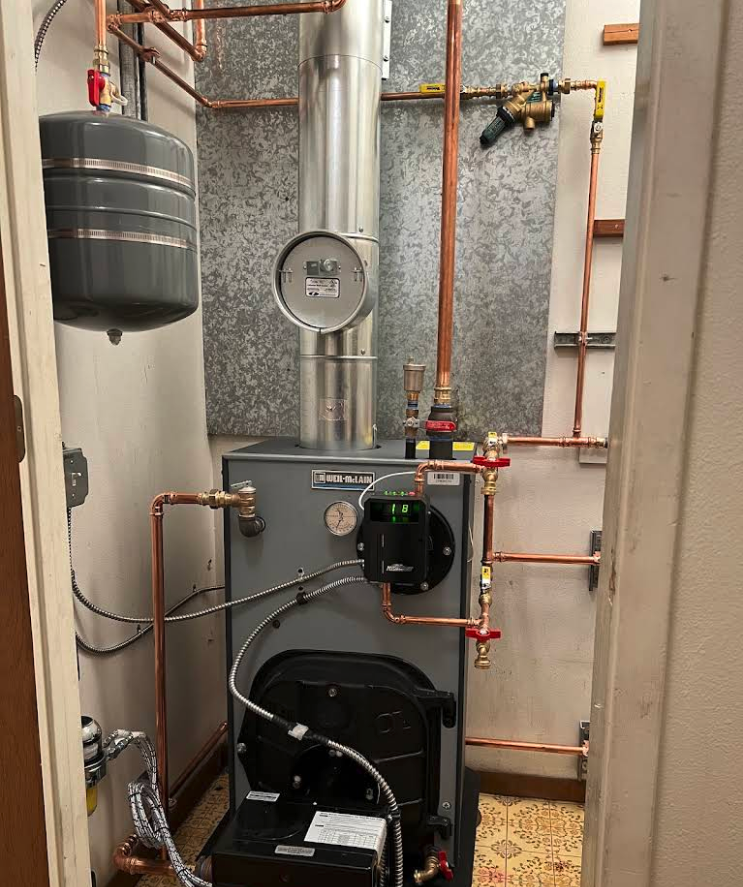
Deciding when to repair or replace your water heater in Mat-Su Valley is one of those decisions that catches homeowners off guard. The water heater works fine right up until it does not, and when it stops working in the middle of a January cold snap, the pressure to do something fast can push people toward a quick fix when what they actually need is a replacement, or toward an expensive swap-out when a simple repair would have bought five more years.Mat-Su Valley homes face a specific set of conditions that accelerate water heater wear. The water supply in the valley, particularly for homes on well systems, carries mineral content that builds up inside tank units faster than in softer municipal water markets.Extreme winters mean the unit works harder and longer than it would in a moderate climate. And the cost of emergency plumbing service in Interior Alaska, with its distance from supply chains and limited availability during peak demand, makes getting caught flat-footed more expensive than it needs to be.The goal of this article is to help you make that repair-or-replace call with clear information rather than panic. Knowing what the warning signs mean, what age thresholds matter, and how to weigh repair cost against replacement cost puts you in a position to plan rather than react.In this article, you will learn about:
- How Alaska conditions affect water heater lifespan in the Mat-Su Valley
- The warning signs that point toward repair versus full replacement
- How to use the age and cost of your unit to make the right call
- What tankless water heaters offer as a long-term alternative
Keep reading to understand exactly what your unit is telling you before it decides for you on its own schedule.
How Mat-Su Valley conditions shorten water heater life
Water heaters in Wasilla, Palmer, and the surrounding Mat-Su Valley communities work under conditions that differ from what most national averages assume. The Department of Energy puts the typical service life of a conventional storage tank water heater at 8 to 12 years, but those figures are based on average conditions. The Mat-Su Valley is not average.Two factors in particular accelerate wear in this market: water hardness and cold inlet temperatures. Both drive the unit to work harder, run longer, and accumulate damage faster than it would in a mild-climate household.
What hard water does to a tank unit
Many Mat-Su Valley homes draw from private wells, and well water in the valley tends to carry elevated levels of calcium and magnesium. When that mineral-heavy water is heated inside a storage tank, calcium carbonate precipitates out of solution and settles at the bottom of the tank as sediment. Over time, that sediment layer builds up between the heating element and the water above it.The insulating effect of sediment forces the burner or heating element to run longer and hotter to transfer the same amount of heat to the water. That extended run time puts additional thermal stress on the tank lining, accelerates corrosion of the anode rod, and increases the chance of tank failure. A unit in a mineral-heavy well water system that never gets flushed can accumulate enough sediment within five or six years to noticeably reduce efficiency and begin shortening the remaining service life of the tank itself.Signs that sediment buildup has reached a significant level include:
- A rumbling or popping sound during heating cycles, caused by water trapped in sediment pockets boiling and pushing through
- Hot water that arrives at the tap with a slightly sulfurous or metallic odor
- Longer-than-normal reheat times after a heavy draw
- A water heater that runs almost continuously to maintain temperature
Annual water heater maintenance that includes a tank flush removes sediment before it accumulates to damaging levels, and it gives a technician the chance to check the anode rod while the tank is being serviced.
Cold inlet temperatures and the extra load they create
In the Mat-Su Valley, groundwater and municipal supply water temperatures drop significantly in winter. Incoming water that enters the tank at 34 or 36 degrees Fahrenheit requires far more energy to raise to the 120-degree set point than the 55-degree inlet water assumed in standard efficiency calculations.According to the U.S. Department of Energy, water heating accounts for roughly 18% of a home's total energy use. In a Mat-Su Valley home during a cold winter, that share climbs higher. The heating elements or gas burner run more frequently, the tank cycles through more heating events per day, and every component in the system accumulates wear faster than it would in a warmer-climate home with the same usage patterns.This is worth understanding when evaluating whether a repair makes financial sense. A unit that is already near the end of its service life, running in a high-demand cold-climate environment, is not going to improve after a repair. If the unit is old and the repair cost is significant, the Alaska climate makes the case for replacement stronger, not weaker.
Warning signs that point toward repair
Not every water heater problem is a death sentence for the unit. Some of the most common failures in Mat-Su Valley homes are component-level issues that can be fixed efficiently without replacing the tank.Knowing the difference between a component failure and a tank failure is the core of the repair-or-replace decision.
A failed heating element or thermostat
Electric water heaters use one or two resistive heating elements to heat the water, and either element can fail on its own without any other part of the unit being compromised. A unit that produces no hot water at all, or that runs out of hot water unusually fast, often has a failed lower element as the cause.Thermostat failures follow a similar pattern. A thermostat that sticks in the off position produces no heat. One that sticks in the on position overheats the water. Both are component-level problems. Replacing a heating element or thermostat in a tank water heater is a straightforward repair, and it makes clear financial sense when the tank itself is in good shape and the unit is under ten years old.The key diagnostic question is whether the tank has rust, sediment buildup, or signs of corrosion beyond normal wear. A heating element replacement in a tank that is already corroding is a short-term fix for a unit that is approaching end of life regardless.
A faulty pressure relief valve
The temperature and pressure relief valve, usually called the T&P valve, is a safety device that opens to release water if the tank overheats or builds excess pressure. Over time, mineral deposits from hard water can cause the valve to weep or drip even when conditions are normal.A dripping T&P valve that is otherwise functional is often just a worn or mineral-fouled valve that needs to be replaced rather than an indication of a tank problem. It is an inexpensive repair that should not be deferred, since a T&P valve that fails to function at all is a safety issue, but replacing it does not require replacing the tank.The situation is different if the T&P valve is dripping because the tank is genuinely building excess pressure. That condition points to a failing thermostat allowing the water to overheat, which is a separate problem that needs its own diagnosis.
A pilot light that will not stay lit
Gas water heaters in the Mat-Su Valley rely on a pilot light and a thermocouple to maintain ignition. A thermocouple that has weakened over time will fail to keep the pilot lit even when the pilot itself is functioning normally. The thermocouple is an inexpensive part, and replacing it is a repair that commonly extends the useful life of a gas unit by several years when the tank itself is in good condition.Ignition failures can also come from a dirty or misaligned pilot assembly, a failing gas valve, or venting problems that disrupt the combustion air supply. A technician who services the unit can identify which component is responsible and give you a repair cost that you can weigh against the age of the unit.
Warning signs that point toward replacement
Some conditions in a water heater indicate that repair will not be enough. These signs mean the tank itself is compromised, and continuing to invest in repairs is spending money on a unit that is going to fail regardless.
Rust or corrosion on the tank exterior
Rust on the outside of a water heater tank, particularly at the base or around the seams, means water has been contacting the exterior metal. That water is either coming from a slow internal leak that has been wicking out, or from condensation that has never been able to fully dry due to the tank's location. Either way, exterior rust indicates that the steel is compromised.Rust at the top of the tank around the inlet or outlet connections is slightly different. That rust is often from fittings rather than the tank wall itself and may be addressable with connection replacements. But rust spread across the base or body of the tank is a sign that the tank is near the end of its useful life, and replacement should be planned rather than deferred.
Water pooling at the base of the tank
Leaking at the base of a storage tank is almost always a sign of tank failure rather than a component problem. The most common cause is a crack in the tank lining, which develops when corrosion has weakened the inner wall enough that thermal expansion during a heating cycle opens a fracture.A small amount of moisture around the base can occasionally come from condensation or from a dripping T&P valve drain line, so those should be ruled out first. But actual pooling water under the tank, particularly water that returns after being dried up, means the tank is breached and replacement is not optional. A leaking tank cannot be patched. Continuing to run it risks flooding the mechanical room and damaging the surrounding structure.This is one of the situations where calling for a water heater installation appointment rather than a diagnostic visit is the right move, because the answer is known before the technician arrives.
Rusty or brown hot water throughout the house
When hot water runs discolored at multiple fixtures throughout the house and the discoloration is consistent rather than flushing clear after a few seconds of flow, the source is almost certainly internal tank corrosion. The anode rod in a storage tank is designed to corrode sacrificially, protecting the tank lining from rust. Once the anode rod is fully depleted, the tank lining itself begins to oxidize, and that rust enters the hot water supply.Discolored hot water that is clearly coming from the hot supply side rather than the cold is a reliable sign that the anode rod is gone and the tank is actively corroding from the inside. The longer this continues, the closer the tank is to a through-wall failure. Getting a water heater repair evaluation at this stage usually ends in a replacement recommendation, because a tank with active internal corrosion has limited remaining service life regardless of what other repairs are made.
Using age and the 50% rule to make the call
Warning signs tell you what is happening with the unit right now. Age tells you how much useful life it has left even if you fix the current problem. Combining those two pieces of information is how you make a repair-or-replace decision that actually holds up over time.The Department of Energy recognizes 8 to 12 years as the typical service life for a conventional gas or electric storage tank water heater. Tankless units, as noted in guidance from the U.S. Energy Information Administration, can operate efficiently for 15 to 20 years or longer with proper maintenance.
Reading your unit's serial number for the manufacture date
Most major water heater manufacturers encode the manufacture date in the serial number, and the convention varies by brand. Common formats include a letter for the month followed by a two-digit year (A22 = January 2022), or a four-digit year-week combination at the start of the serial number (2217 = 17th week of 2022). The manufacturer's website or a quick search of the brand name plus serial number decoder will confirm the format.The manufacture date is not the same as the installation date, but for units that have been in a home for several years without replacement, it is close enough to give you the age information you need. If you cannot find the serial number, a technician doing a service visit can locate it and decode it for you.
Applying the 50% threshold
A commonly used and practical rule for repair-or-replace decisions is this: if the estimated repair cost exceeds 50% of the cost of a new unit, replacement is almost always the better financial decision.The reasoning is straightforward. A repair that costs half the price of a new unit buys you a fixed version of an aging system that will continue to accumulate wear and eventually need another repair. A new unit comes with a warranty, known performance, and a full service life ahead of it.In the Mat-Su Valley, where the combination of hard water, cold inlet temperatures, and heavy seasonal demand accelerates wear, this threshold becomes even more meaningful. The remaining useful life of an older unit after a repair is shorter here than in a moderate-climate market, which makes the case for replacement stronger at a given dollar amount.Consider these factors together when weighing the repair-or-replace question:
- The age of the unit relative to the 8-to-12-year average service life
- Whether the current failure is a component issue or a tank issue
- The estimated repair cost relative to the cost of a replacement installation
- How many times the unit has needed repair in the past three years
- Whether the unit has ever had regular maintenance, including annual flushes
A unit that is nine years old, has never been flushed, has a repair estimate at 40% of replacement cost, and has already had one previous repair in the last two years is a replacement candidate even though the repair cost is below the 50% threshold. Age and repair history matter as much as the individual repair price.
What tankless water heaters offer Mat-Su Valley homeowners
Conventional tank water heaters dominate the Mat-Su Valley market because they are familiar, widely stocked, and relatively inexpensive to install. But when a tank unit reaches end of life and a homeowner is already spending money on a new installation, tankless water heaters are worth understanding as an alternative.
How tankless units handle the cold-climate demand profile
A tankless water heater heats water on demand rather than storing and continuously reheating a tank of water. In a cold-climate market like the Mat-Su Valley, where incoming water temperatures are low in winter and demand spikes significantly with longer showers and higher hot water use during cold months, the on-demand model changes the performance equation.The absence of standby heat loss is the primary efficiency advantage. A storage tank that maintains 50 gallons at 120 degrees around the clock loses heat to the surrounding environment continuously, which means the burner or element cycles on repeatedly even when no hot water is being drawn. A tankless unit does not have that loss. It runs only when a fixture is open, and it stops the moment the fixture closes.For Mat-Su Valley homeowners on well systems with hard water, tankless water heaters require annual descaling to prevent heat exchanger scaling, which is a real maintenance requirement that should not be overlooked. But they avoid the sediment-in-the-tank problem entirely because there is no tank for sediment to accumulate in.
Service life and long-term cost
The service life advantage of a tankless unit is significant. Where a tank unit in the Mat-Su Valley might deliver 8 to 10 years of service under hard-water conditions, a well-maintained tankless unit commonly runs 15 to 20 years. The higher upfront installation cost, which reflects both the unit price and the modifications often needed to the gas line, venting, or electrical supply, spreads out over a longer replacement cycle.Whether the long-term economics favor a tankless upgrade depends on the specific home, the existing infrastructure, and how the installation cost pencils out against the extended service life. A technician who evaluates your current setup can give you a direct comparison. The key point is that when a tank unit fails at age 10 or 11, the replacement decision is also an opportunity to consider whether the next 15 years of hot water service looks different with a tankless system.
Understanding what the swap involves
Switching from a tank unit to a tankless system is not a direct swap. Tankless gas units require higher BTU input than most existing gas lines are sized for, which often means upgrading the gas supply line. Venting requirements differ as well, since tankless units use a sealed combustion system with a direct vent rather than the atmospheric vent that a conventional tank uses.None of these changes are prohibitive, but they are real costs that belong in the comparison. A technician assessing your home can tell you what the existing infrastructure supports and what modifications would be needed, giving you an accurate installed cost to compare against a like-for-like tank replacement.
Conclusion
The repair-or-replace decision on a water heater is not complicated once you have the right information in front of you. Age, the nature of the failure, repair cost relative to replacement, and the specific demands the Mat-Su Valley climate puts on your unit all point toward the same decision when you add them up honestly.The homeowners who end up making expensive mistakes are the ones who repair an aging tank to avoid the upfront cost of replacement, only to have the unit fail again six months later, or who replace a unit that had five good years left in it because a technician scared them with worst-case framing.Know your unit's age, know what category the problem falls into, and use the 50% threshold as a starting point for the cost conversation. That framework gets most homeowners to the right answer without guesswork.Prospector Plumbing and Heating serves the Mat-Su Valley, Wasilla, Palmer, and surrounding Interior Alaska communities with same-day service and upfront pricing. Call us when your water heater is giving you trouble and we will tell you straight what it needs.
Licensed & insured Alaska plumbing and heating. Locally owned and operated! We're the happiest plumbers in Alaska and go the extra mile on every job!
Fairbanks
135 32nd Avenue
Fairbanks AK 99701
North Pole
North Pole, AK 99705
Mat-Su Valley
1712 N Williwaw Way
#1 Wasilla, AK 99654
Eagle River
AK 99577