

Signs your outdoor water line needs repair in North Pole homes
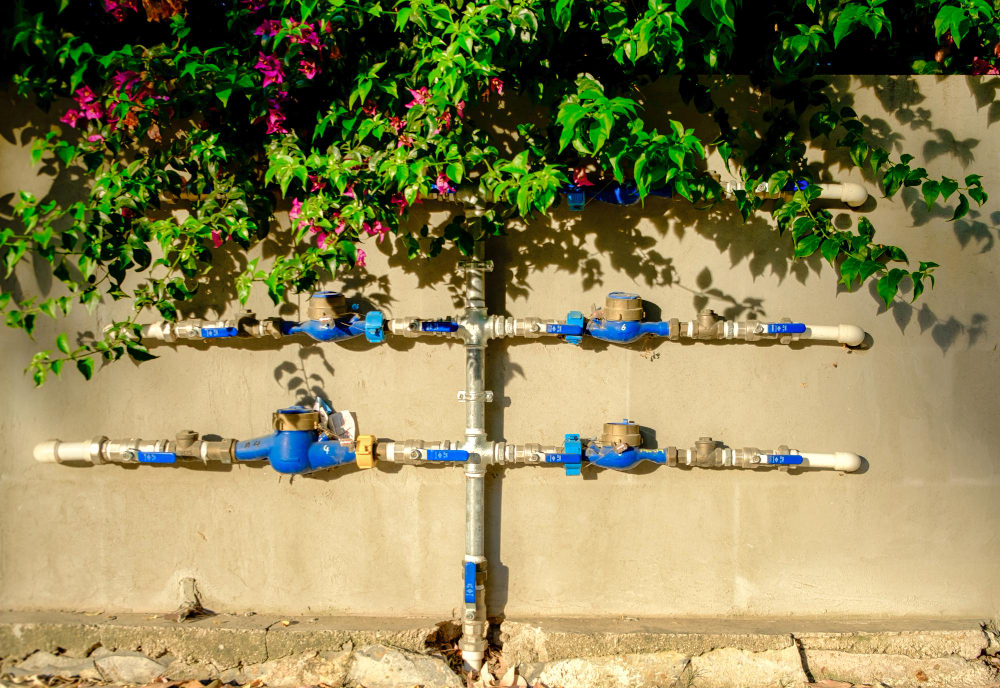
The outdoor water line running from the city main to your house is one of the hardest-working pieces of infrastructure on your property, and in North Pole, it works under conditions that would wear out pipes twice as fast as anywhere in the lower 48. Signs your outdoor water line needs repair in North Pole often show up in ways homeowners do not immediately connect to the pipe itself: a soggy patch in the yard, a water bill that crept up over two months, pressure that seems a little weaker than it used to be.Most buried line failures in Interior Alaska do not happen all at once. They develop slowly, from a hairline fracture or a joint that shifted during a freeze-thaw cycle, and they give off signals for weeks or months before the situation becomes a full break. The homeowners who catch them early spend far less money and deal with far fewer headaches than the ones who wait until water is pooling in the driveway or the pressure drops to nothing.This article covers the specific warning signs that a North Pole outdoor water line is under stress, why the local climate makes buried pipes more vulnerable than most homeowners realize, and what a repair or replacement actually looks like when a licensed technician gets involved.In this article, you will learn about:
- Why North Pole's climate is especially hard on buried water lines
- The yard, pressure, and billing signs of a failing line
- What happens inside the pipe during freeze-thaw cycles
- When repair is enough and when replacement is the right call
Keep reading to understand exactly what your property is telling you and what to do about it before a manageable problem becomes an emergency.
Why North Pole is particularly hard on buried water lines
Outdoor water lines in most parts of the country deal with age, corrosion, and the occasional hard freeze. In North Pole, they deal with all of that plus something most homeowners in warmer climates never have to think about: the ground itself moves every single year.The active layer of soil above the permafrost in Interior Alaska thaws each spring and refreezes each fall. According to the Alaska Division of Geological and Geophysical Surveys, fluctuations in seasonal temperature cause the ground to move as the upper layers freeze through ice lens formation and then lose that ice during the thaw. Every cycle of that movement exerts mechanical force on anything buried in the soil, including your water line.That force is not evenly distributed. Different sections of soil thaw and refreeze at different rates depending on moisture content, sun exposure, and whether a structure nearby changes the thermal profile of the ground. The result is differential movement, where one part of a buried pipe shifts by a different amount than the adjacent section. That kind of uneven stress is exactly what cracks joints, opens fittings, and eventually fractures pipe walls.
What frost heave actually does to a pipe
Frost heave is the upward displacement of soil caused by the growth of ice masses beneath the surface. The Alaska DGGS Guide to Geologic Hazards defines it as the uneven lifting and distortion of surface structures due to subsurface freezing of water and growth of ice lenses. For a buried pipe, that means sections of the line can be pushed upward, pulled sideways, or set down at a different elevation than they started.A pipe that was installed at proper depth and pitch several decades ago may now be running shallower than code requires in some sections, and those shallow sections are the first to freeze during a cold snap. A joint that was sealed correctly at installation may now have a gap introduced by years of heave cycles. None of this is visible from the surface. It becomes visible through what shows up in your yard, your pressure gauge, and your water bill.
The age problem in North Pole housing stock
North Pole developed heavily in the 1960s through the 1980s, and a significant portion of the housing stock still carries the original water service lines from that era. Galvanized steel lines from the 1960s and 1970s are now 50 to 60 years old, well past their intended service life. These pipes corrode from the inside out, building up iron oxide scale that restricts flow before the pipe wall eventually fails.Copper lines from the same era fare better against corrosion but are more susceptible to cracking from frost heave stress because copper work-hardens over time, losing the ductility that helps a pipe flex without breaking. The combination of material age, freeze-thaw cycling, and accumulated mechanical stress means that outdoor line failures in North Pole are not rare events. The U.S. EPA estimates there are approximately 2.2 million miles of water pipe in the ground across the United States, and a Utah State University study commissioned with EPA support found that the U.S. and Canada together experience roughly 260,000 water main breaks annually, with a single repair averaging $10,000 in direct and indirect costs. In a market like Interior Alaska where labor and materials carry a significant distance premium, that number climbs higher.
What your yard is telling you
Your yard is often the first place a failing outdoor water line announces itself, and it speaks in a language that is easy to misread. Homeowners commonly attribute soggy ground to snowmelt, a high water table, or ordinary drainage, when the real source is a buried pipe leaking steadily a few feet below the surface.These yard-level signs are worth taking seriously, especially in combination with each other.
Unexplained wet spots that do not dry out
A patch of yard that stays soggy days after the last rain or snowmelt, especially one that seems to persist regardless of the weather, is one of the most reliable indicators of a subsurface water line leak. The leak does not need to be large. Even a slow seep from a failing joint or a pinhole fracture in the pipe wall can saturate the surrounding soil and keep it wet indefinitely.Pay attention to where the wet spot is relative to the path your water line takes from the street to the house. In most North Pole homes, the service line runs in a relatively direct path from the street-side meter to the foundation entry point. A wet patch along that corridor, particularly one that was not there last season, is a reason to call for a water line inspection before the situation progresses.The wet spot may be accompanied by a slight depression or low point in the yard. When a pipe leaks over a period of weeks or months, it can gradually wash out the soil underneath, creating a soft zone that settles lower than the surrounding ground.
Grass that grows greener in a straight line
Water feeds plant life. When a buried line is leaking slowly, the ground above it receives a continuous supply of moisture that the surrounding yard does not. The result is a strip of grass or vegetation that is visibly greener, thicker, and faster-growing than everything adjacent to it, running in a line that corresponds to the path of the underground pipe.This sign is more obvious in late spring and early summer, when growth rates are highest and the contrast between well-watered and normally-watered grass is easy to spot. In late summer and fall, when rainfall is lower, the strip may also stay noticeably green while the rest of the yard shows drought stress.Some homeowners mistake this for a natural drainage pattern or a difference in soil quality. If the green strip runs parallel to the general direction of the water service and starts at or near the street, it is worth investigating. A plumbing leak detection visit can confirm whether the source is the service line before any excavation is needed.
Sinkholes, depressions, and settling near the foundation
A more advanced sign of an outdoor line problem is visible settling or sinking of the soil above or near the line. When a leak has been running long enough to wash out significant amounts of fine soil particles from the surrounding area, the ground above it loses structural support and begins to settle or sag.Near the foundation, this can look like soil pulling away from the base of the house, cracks forming in the driveway or walkway over the path of the line, or a noticeable dip in a section of yard that was previously level. These are not cosmetic problems. Settled soil near a foundation creates drainage toward the house rather than away from it, and a compromised water line that has been washing out fill material for months can eventually undermine the structural support for your slab or foundation walls.
Pressure and flow changes inside the house
Yard signs are visible when you are outside and paying attention. Pressure and flow changes make themselves known every time someone turns on a tap. They are often the first thing homeowners actually notice, even if they do not connect them to the outdoor line.
Whole-house pressure that feels weaker than it used to
Water pressure in a residential North Pole home should hold steady between 40 and 80 PSI. When pressure starts dropping across the whole house rather than at one specific fixture, the problem is almost never inside the house. A single fixture with low pressure usually means a clogged aerator or a partially closed shutoff valve. When every tap, every shower, and every hose bib in the house feels weaker than normal, the issue is upstream, somewhere between the city main and the point where the line enters the foundation.A developing fracture or a joint that is gradually opening up in the outdoor service line bleeds pressure continuously. The loss may be subtle at first, noticeable only if someone uses two fixtures at the same time and the flow feels insufficient. Over time, as the opening in the pipe grows, the pressure drop becomes more pronounced.Low water pressure that develops gradually over weeks or months is a different pattern than pressure that disappears suddenly. Sudden loss points to a complete break or a shutoff issue. Gradual decline points to a slow leak that has been getting worse.
Pressure that fluctuates without any change in usage
A healthy water line delivers consistent pressure. When pressure jumps up and down without any corresponding change in how much water is being used inside the house, it can indicate that a compromised section of line is responding to changes in the surrounding soil conditions, swelling and shifting in ways that partially open and partially close a crack or a loose joint.This is more common in spring and fall, when soil temperatures are changing rapidly and the freeze-thaw cycle is most active. A pipe joint that was barely holding together may seal slightly when the surrounding soil compresses against it during freezing and open up again when the soil thaws and relaxes.Fluctuating pressure combined with any of the yard signs described above is a strong indicator that a sewer line repair or water service evaluation is overdue. Both types of buried lines can fail simultaneously in homes with aging infrastructure, and a camera inspection of the line tells you definitively what you are dealing with.
Discolored water, especially in the morning
Rust-colored or brownish water at the tap first thing in the morning, before any hot water has been run, points to a problem in the cold supply side of the system. When a metal pipe is cracked or corroding, iron oxide enters the water stream and discolors it. The discoloration is often most visible after the system has been sitting overnight without flow, which allows the sediment and particles to settle into the water sitting in the pipe.If the discoloration clears after running the cold tap for 30 to 60 seconds, the source is likely the service line or the section of indoor pipe closest to the entry point. If it persists or recurs consistently, the deterioration inside the pipe is more extensive.Discolored water is a health concern in addition to a plumbing concern. If this is happening in your home, running the tap briefly before drinking or cooking is a short-term step, but it does not address the underlying problem. A plumbing inspection that includes the outdoor service line is the right next move.
Your water bill and meter as diagnostic tools
The water bill and the meter on your property are two of the most reliable diagnostic tools available to a North Pole homeowner, and they do not require any special equipment or expertise to use.
A water bill that is trending higher for no clear reason
Compare your current water bills to the same months from the prior year. A 10 to 15 percent increase in usage during a period when household habits have not changed is worth investigating. A 20 to 30 percent increase with no obvious explanation, such as filling a pool, adding an irrigation system, or hosting long-term guests, is a strong signal that water is leaving the system somewhere it should not be.The EPA's WaterSense program notes that the average American home leaks more than 10,000 gallons of water per year through drips and failures. In a climate like North Pole's, where a failing outdoor line may be draining into frozen ground for months before anyone notices, the cumulative loss can be significantly higher by the time the problem is caught.Billing trends are particularly useful because they reveal slow leaks that do not produce obvious visible signs. A pipe that is seeping into clay-heavy or deeply frozen soil may not produce a wet yard patch for weeks, but the meter records every gallon.
The shut-off valve meter test
The most direct way to check for an outdoor line leak without calling anyone is the meter test. Turn off every water-using fixture and appliance in the house. That includes the refrigerator ice maker, any humidifiers, and irrigation systems. Then go to your water meter and watch the dial or the digital display for two full minutes.Any movement in the meter reading while all fixtures are off means water is actively flowing somewhere. If nothing is running inside the house, it is leaving through a leak, and on a property with an aging outdoor service line, the outdoor line is the most likely culprit.A meter that shows small, intermittent movement rather than continuous flow can indicate a line that is cracking and sealing in response to soil pressure changes, which is consistent with a frost-heave-stressed pipe in the North Pole climate. Either way, the test result is worth reporting to a technician when you schedule an outdoor plumbing evaluation.
When repair is enough and when the whole line needs to go
Not every outdoor water line problem requires a full replacement. The right answer depends on the age of the pipe, the material it is made from, where the failure is located, and how the rest of the line looks once a technician gets eyes on it.
Point repairs versus full replacement
A point repair addresses a specific, localized failure, such as a single cracked joint or a small section of pipe that shifted out of alignment. It makes sense when the rest of the line is in good condition and the failure is clearly isolated. A camera inspection of the full line before committing to a point repair is the right approach, because replacing a two-foot section of a line that has three other developing failures 20 feet away is not a good use of money.Full replacement makes more sense in a few predictable situations:
- The pipe is galvanized steel and more than 40 years old, meaning scale buildup and wall thinning are likely throughout the line, not just at the failure point
- A camera inspection shows multiple areas of joint separation, cracking, or deformation along the run
- The line has been repaired more than once in the past five years, which suggests the pipe material or installation has reached the end of its serviceable life
- The pipe is running shallower than the required frost depth in one or more sections, making refreezing a recurring risk regardless of what material it is made from
What trenchless options look like in Interior Alaska
In warmer-climate markets, trenchless water line replacement, where a new pipe is pulled through the existing pipe's path without excavating a full trench, is a common option. In Interior Alaska, trenchless methods are available but require careful evaluation because the frost depth and the soil composition affect both the method that can be used and the timing of the work.A technician familiar with North Pole conditions can assess whether the soil conditions and pipe routing make a trenchless sewer repair or pipe-pulling approach viable, or whether open excavation is the more straightforward path. Either way, the work needs to happen during a window when the active soil layer is workable, which in Interior Alaska means summer and early fall before the ground locks up again.
What to tell your technician when you call
The more specific you can be about what you have observed, the faster a technician can triage the problem. Before calling, take note of:
- When you first noticed the pressure change, wet spot, or billing increase
- Whether the signs are consistent or intermittent
- The approximate age of the house and whether the water service line has ever been replaced
- The result of any meter test you ran and what the meter showed
Having that information ready means the first visit can move directly to assessment rather than spending time gathering background. Given that emergency repairs in Interior Alaska carry a real scheduling premium, especially during peak seasons, calling before a slow leak becomes a full break is always the better path.
Conclusion
An outdoor water line that is developing a problem in North Pole rarely fails without warning. The yard, the meter, the pressure at your fixtures, and the water in your pipes all carry information, and learning to read those signals is the difference between scheduling a planned repair on your terms and dealing with an emergency in the middle of the next cold snap.The signs covered in this article, wet ground that does not dry, greener grass in a suspicious line, whole-house pressure loss, and a water bill that keeps creeping up, are not individually alarming. In combination, they are a clear message that something underground needs attention.Do not wait for a full break to confirm what the signs are already telling you. Prospector Plumbing and Heating serves North Pole, Fairbanks, and the surrounding Interior Alaska communities with same-day service and upfront pricing. Call us to schedule a water line inspection and know what you are dealing with before the problem decides for you.
Licensed & insured Alaska plumbing and heating. Locally owned and operated! We're the happiest plumbers in Alaska and go the extra mile on every job!
Fairbanks
135 32nd Avenue
Fairbanks AK 99701
North Pole
North Pole, AK 99705
Mat-Su Valley
1712 N Williwaw Way
#1 Wasilla, AK 99654
Eagle River
AK 99577