

Repiping services in Fairbanks AK when the old pipes are failing from the inside out
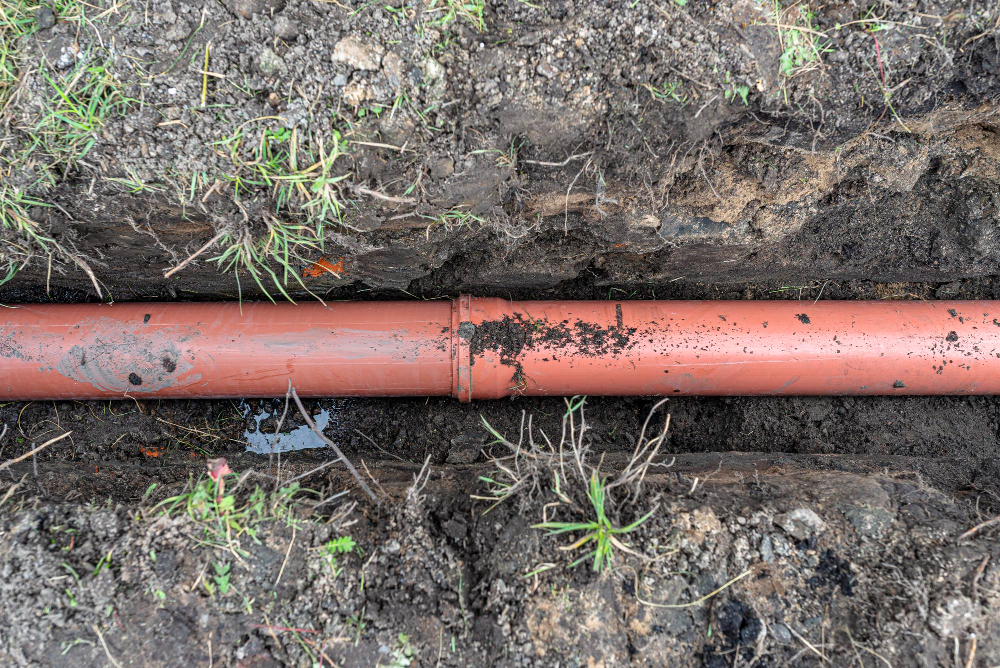
Repiping services in Fairbanks AK address a problem that does not announce itself all at once. It builds over decades inside the walls, under the floors, and through the crawl space as the original supply lines corrode, narrow, and weaken to the point where individual repairs can no longer keep pace with the deterioration. By the time a Fairbanks homeowner is seeing rusty water at the faucet, dealing with recurring pinhole leaks, and noticing pressure that drops a little more each year, the plumbing system has been declining from the inside out for longer than most people realize.
In this article, you will learn why leaks appearing in different parts of the house are symptoms of the same system-wide problem, when patching individual failures stops making financial sense, how PEX and copper serve different roles in a Fairbanks repiping project, what the repiping process actually looks like from start to finish, and when to schedule the work for the best combination of cost and convenience.
Here's what you need to know.
- The leaks showing up in different spots are not separate problems
- Patching an aging plumbing system costs more over time than replacing it once
- PEX and copper serve different roles in a Fairbanks whole house repiping project
- What a residential repiping project in Fairbanks actually involves
- The timing and conditions that make a repipe easier and less expensive
Keep reading to understand when the pipe behind the wall has reached the point where replacing the system is the more practical and more economical path forward.
The leaks showing up in different spots are not separate problems
When a Fairbanks homeowner calls for a leak repair in the bathroom one season and another leak appears in the kitchen the next, it feels like two unrelated events. In most cases, they are not. They are two visible symptoms of the same condition: a plumbing system that has corroded past the point where the pipe walls can hold pressure reliably.
Galvanized steel corrodes from the inside and narrows like a clogged artery over decades
Galvanized steel pipe was the standard supply line material in residential construction through the 1970s and into the early 1980s. The zinc coating on the interior of the pipe was designed to resist corrosion, but that coating has a finite lifespan. Once the zinc layer is consumed, the bare steel beneath it begins oxidizing.
The rust that forms on the interior pipe wall does not flake off and flush away. It builds in layers, bonding to the steel and growing inward. Over decades, the effective internal diameter of a half-inch galvanized supply line can shrink to a quarter inch or less. The restriction reduces water pressure to every fixture on that run and creates turbulence at fittings that accelerates corrosion at those points.
A cross-section of a 40-year-old galvanized pipe removed during a repiping project typically shows a thick rust layer lining the interior, with the remaining opening barely large enough to pass a pencil. The pipe may look intact from the outside, but the inside tells a completely different story.
A pinhole leak in the bathroom this year and one in the kitchen next year mean the whole system is going
Pinhole leaks in galvanized or copper supply lines develop at points where the pipe wall has thinned to the point of failure. In a system that is corroding uniformly, the pipe wall thickness is degrading at a similar rate throughout the entire network. The first pinhole appears at the weakest point. The second appears at the next weakest. The third is already forming.
Each repair addresses one spot, but the condition that produced the failure exists everywhere the same pipe material is installed. A patch on a corroded pipe restores the seal at that location, but the surrounding pipe is in the same condition and approaching the same threshold.
This is the pattern that signals the transition from individual plumbing repair to a whole-system evaluation. A single pinhole leak on a ten-year-old copper line may be an isolated issue. Recurring leaks at different locations on pipe that is 30 or 40 years old indicate the system is past the point where individual repairs provide lasting value.
Rusty water at the faucet is the pipe telling you what it looks like on the inside
Brown, orange, or rust-colored water coming from the hot or cold supply is a direct indicator of internal pipe corrosion. The discolored water is carrying oxidized metal particles from the interior pipe wall into the fixture.
If the discoloration appears only at the hot water faucet, the corrosion may be concentrated in the water heater tank or the hot water supply lines. If it appears at both hot and cold faucets, the cold water supply lines are affected as well, which means the corrosion is in the main distribution system.
In Fairbanks, where freeze-thaw cycling places additional mechanical stress on aging pipe joints and walls every winter, the corrosion process is accelerated by the repeated expansion and contraction of ice forming inside the pipe during the coldest months. The combination of internal corrosion and external thermal stress shortens the functional lifespan of galvanized steel pipe compared to the same material in a milder climate.
What discolored water reveals about the pipe system:
- Rust color that clears after running the faucet for 30 seconds suggests localized corrosion near that fixture's supply connection
- Persistent discoloration that does not clear after extended flushing indicates widespread corrosion throughout the supply network
- Discoloration that appears worse in the morning, after the water has sat in the pipes overnight, confirms that contact time between water and the corroded pipe wall is producing the color
- Particles or flakes in the water stream, especially visible when filling a white container, indicate that the corrosion has progressed to the point where the pipe wall is actively shedding material
Patching an aging plumbing system costs more over time than replacing it once
The economics of repair versus replacement shift as the frequency of failures increases. A single repair on an otherwise sound system is straightforward. A pattern of recurring repairs on a system that is deteriorating everywhere becomes a compounding cost that eventually exceeds the one-time investment of a repipe.
Each repair fixes the weakest spot but the next weakest is already forming
Every repair call includes a trip charge, diagnostic time, the repair itself, and often drywall patching or surface restoration if the leak was behind a wall. When these calls happen once every few years, the cumulative cost is manageable. When they start occurring annually or multiple times per year, the total spending adds up rapidly.
The money spent on individual repairs does not improve the overall condition of the system. It restores one point while the rest of the network continues to degrade. After three or four repair calls, the homeowner has spent a significant portion of what a repipe would cost and still has the same aging pipe system in the walls.
A useful comparison is to total the cost of the last three to five years of plumbing repairs and project that rate forward. If the trend is increasing, the crossover point where a repipe becomes the less expensive option is closer than it appears.
A home repipe contractor evaluates the full system, not just the section that leaked today
A plumber responding to a single leak diagnoses and repairs that specific failure. A home repipe contractor evaluates the entire supply system to determine the overall condition of the pipe, the extent of the corrosion, and whether the system can continue to be repaired incrementally or whether it has reached the point where replacement is the more practical path.
The evaluation includes checking water pressure at the main shutoff and at individual fixtures, inspecting exposed pipe in the crawl space and mechanical room for external corrosion and joint deterioration, running water to assess color and sediment, and in some cases cutting a sample section of pipe to view the internal condition.
This assessment gives the homeowner a complete picture rather than a fixture-by-fixture view. The recommendation may be that the system has several more years of serviceable life with targeted repairs, or it may be that the corrosion is advanced enough that a repipe is the better investment. Either way, the decision is informed by the actual condition of the pipe throughout the house.
Q: How does a plumber determine the overall condition without opening every wall?
Exposed pipe runs in the crawl space, basement, and mechanical room provide representative samples. Pressure testing and flow measurement identify restrictions. Water quality testing reveals the degree of internal corrosion. These methods assess the system without full demolition.
Q: Can the plumber repipe just the worst sections and leave the rest?
Partial repiping is an option when corrosion is concentrated in one area, such as a single bathroom or the hot water lines only. However, connecting new pipe to old corroded pipe creates a junction that may become the next failure point. A full repipe eliminates that risk.
Q: Does a repipe include the drain lines or just the supply lines?
A standard residential repipe addresses the supply lines, which are the pressurized hot and cold water distribution pipes. Drain lines are evaluated separately and replaced only if they show their own deterioration. The two systems are independent and may be in different conditions.
Q: What happens to the old pipe when the house is repiped?
In most cases, the old pipe is abandoned in place inside the walls and the new pipe is run through a different path. Removing every section of old pipe would require opening every wall and ceiling, which adds significant cost and disruption without a structural benefit.
The plumbing pipe replacement conversation usually starts after the third or fourth service call
Most homeowners do not begin researching repiping after a single leak. The conversation typically starts after a series of repair visits, a pattern of declining water quality, or a pressure loss that individual repairs have not resolved. By the time the homeowner is asking about plumbing pipe replacement, the system has usually been signaling its condition for years.
The earlier the conversation happens, the more options the homeowner has. A planned repipe during a renovation, during a season when scheduling is flexible, and before a catastrophic failure occurs gives the homeowner control over the timeline, the scope, and the budget. A repipe triggered by a burst pipe in January, with water running into a finished space, compresses every decision into a crisis.
PEX and copper serve different roles in a Fairbanks whole house repiping project
The choice of pipe material for a Fairbanks repipe is not one-size-fits-all. PEX and copper each have properties that make them better suited to specific applications within the same project. The right repiping plan may use both materials in different locations based on the installation conditions.
PEX stays flexible down to minus forty and handles freeze-thaw cycles better than rigid pipe
Cross-linked polyethylene, known as PEX, has become the dominant supply line material for residential repiping in Interior Alaska. Its flexibility allows it to be routed through floor framing, around obstacles, and along long runs with fewer fittings than rigid pipe requires.
More importantly for Fairbanks, PEX retains its flexibility at extreme cold temperatures and has a limited ability to expand if water inside it freezes. A PEX line that freezes may expand without cracking, whereas copper and galvanized steel split when the ice inside them exceeds the pipe's rigidity. This does not make PEX freeze-proof, but it gives the pipe a greater margin of tolerance for the freeze events that are a recurring reality in Fairbanks homes.
PEX is also corrosion-resistant. It does not rust, does not build internal scale, and does not react with dissolved minerals in the water. A PEX supply system installed today will deliver the same water quality and the same flow rate in 25 years that it delivers on the day of installation.
Copper lasts longer in exposed runs but costs more and takes longer to install
Copper remains the preferred material for exposed pipe runs in mechanical rooms, near water heaters, and at fixture connections where the pipe is visible and accessible. Copper is rigid, which makes it stable and professional-looking in exposed installations. It also has a longer track record of durability in environments where the pipe is not subject to freeze risk.
In a Fairbanks whole house repiping project, copper is commonly used for the final connections at the water heater, at the manifold, and at fixture shutoff valves where rigidity and accessibility matter. PEX handles the concealed runs through walls, floors, and crawl spaces where flexibility, freeze tolerance, and speed of installation are more important.
The material cost of copper is higher than PEX per linear foot, and the labor to solder copper joints takes longer than the crimp or expansion connections used with PEX. A full-copper repipe costs significantly more than a PEX or hybrid system and takes more installation time, which is why most Fairbanks repiping projects use PEX for the majority of the distribution runs.
PVC turns brittle well above a Fairbanks winter low and is not rated for unheated spaces here
PVC and CPVC pipe are used in supply line applications in warmer climates, but they are not appropriate for the concealed runs in a Fairbanks home. PVC becomes brittle at temperatures well above the winter lows that Interior Alaska experiences regularly. A PVC supply line in a crawl space that reaches minus 20 or colder becomes rigid and susceptible to cracking under any mechanical stress or vibration.
CPVC has a higher temperature tolerance than standard PVC, but it is still a rigid thermoplastic that does not tolerate freeze conditions well. Neither material is suitable for the unheated spaces where supply lines in a Fairbanks home must often run.
- PEX is the standard choice for concealed supply runs through walls, floors, and crawl spaces in a Fairbanks repiping project
- Copper is used for exposed runs in mechanical rooms, water heater connections, and fixture rough-ins where rigidity and appearance matter
- PVC and CPVC are not rated for the temperature extremes found in unheated spaces in Interior Alaska and should not be used for supply lines in those locations
- A hybrid approach using PEX for distribution and copper for specific connections provides the best balance of performance, cost, and cold-climate durability
What a residential repiping project in Fairbanks actually involves
A residential repiping project is not a series of individual pipe replacements. It is a planned, coordinated replacement of the entire supply line network, from the main shutoff through every fixture in the house. The process follows a defined sequence that minimizes disruption and ensures the new system meets code.
The plumber maps every supply line, identifies which walls need to open, and plans the route
Before any pipe is cut or any wall is opened, the plumber maps the existing supply system and plans the routing for the new pipe. This planning phase identifies where the existing pipe runs, which walls and ceilings need to be opened for access, where the new pipe will be routed, and how many penetrations through framing are required.
In many Fairbanks homes, the new PEX can be routed through the crawl space and up through the floor framing to each fixture, which reduces the number of walls that need to be opened. Where the existing pipe runs through interior walls that cannot be bypassed from below, targeted access holes are cut at specific locations rather than opening the full wall.
The routing plan also accounts for the freeze protection requirements specific to a Fairbanks installation. All new supply lines are routed through interior walls and heated spaces wherever possible, avoiding the exterior wall cavities where the old pipe may have been run before code required interior routing. Any run that must pass through a marginally heated space receives pipe insulation and heat tape as part of the installation.
A manifold system gives every fixture its own shutoff, like a breaker panel for the water supply
A PEX manifold system is the most common distribution configuration used in modern repiping projects. The manifold is a central distribution point, typically mounted in the mechanical room or the crawl space near the main shutoff. Individual PEX lines run from the manifold to each fixture in the house, and each line has its own dedicated shutoff valve at the manifold.
This design offers several advantages over the traditional trunk-and-branch system used with copper and galvanized pipe.
How a manifold system compares to a traditional trunk-and-branch layout:
- Each fixture receives its own dedicated line, which means opening a faucet in the kitchen does not reduce pressure to the shower running at the same time
- Shutting off water to a single fixture for repair requires turning one valve at the manifold rather than searching for a buried shutoff valve inside a wall
- Fewer fittings in the distribution runs mean fewer potential leak points and lower friction loss throughout the system
- The manifold provides a single, accessible location where the homeowner or plumber can identify, isolate, and control every supply line in the house
A manifold system functions like an electrical breaker panel for the water supply. Every line is labeled, every valve is accessible, and the homeowner has clear control over the entire distribution system from one location.
Most whole house repiping finishes in two to five days with patching and cleanup included
A whole house repiping project in a typical Fairbanks single-family home takes two to five working days depending on the size of the house, the number of fixtures, the accessibility of the pipe routes, and whether the project includes drywall patching and surface restoration.
Day one typically involves the manifold installation, the main trunk connections, and the beginning of the distribution runs. Days two and three complete the fixture connections and the pressure testing. If drywall patching and basic restoration are included in the scope, those are completed on the final day after the system has been tested and inspected.
During the project, the household has limited or no water access for portions of each work day. The plumber plans the work to restore water to critical fixtures, typically a bathroom and the kitchen, by the end of each day so the household can function overnight. A residential repiping project that is planned and scheduled in advance causes less disruption than most homeowners expect.
The timing and conditions that make a repipe easier and less expensive
The cost and complexity of a repiping project are not fixed. They vary based on when the work is done, what other projects are happening in the house at the same time, and whether the main service line is addressed as part of the same scope.
Repiping during a kitchen or bathroom renovation saves money because the walls are already open
The most expensive non-pipe cost in a repiping project is the wall access and restoration. Cutting drywall, opening ceiling sections, and patching everything back together after the new pipe is installed represents a significant portion of the labor and material cost.
When a kitchen or bathroom renovation is already underway, the walls in those rooms are already open. The plumber can access the pipe cavities, run new lines, and make connections without creating additional openings that need to be closed and finished later.
Coordinating a repipe with a renovation project reduces the total combined cost by eliminating duplicate drywall work, combining permit inspections, and allowing the plumber and the general contractor to share the open-wall phase. The homeowner gets a renovated space and a new supply system for less than the two projects would cost separately.
Summer scheduling avoids the emergency pricing and frozen-ground complications of winter work
A repiping project scheduled during the summer months avoids the two most significant cost multipliers that apply to winter plumbing work in Fairbanks. Emergency and peak-season pricing during winter, when heating repair demand is highest, increases labor rates. Frozen ground conditions complicate any work that involves the service line entry point or the crawl space.
Summer scheduling gives the plumber full access to the crawl space under normal working conditions, allows the main water service line connection to be addressed without ground thawing, and provides the longest available daylight hours for a project that may span several consecutive work days.
The homeowner also benefits from better scheduling flexibility. Summer plumbing appointments are easier to book at preferred dates and times than winter appointments, when the service calendar is dominated by emergency calls.
The main water service line from the street should be evaluated at the same time as the house pipes
A whole house repipe replaces every supply line inside the building, but the main service line from the municipal connection to the house is a separate pipe that may be in the same condition as the interior plumbing. If the house was built in the 1960s or 1970s and the interior pipes are corroded galvanized steel, the service line from the street is likely the same material and the same age.
Replacing the interior supply system while leaving a corroded or deteriorating service line in the ground creates a bottleneck at the point of entry. The new PEX system inside the house can deliver full pressure and flow, but if the service line restricts flow before the water even reaches the house, the new system cannot perform to its potential.
A water line evaluation at the time of the repipe determines whether the service line can support the new interior system. If the service line is sound, no additional work is needed. If it shows corrosion, mineral scaling, or joint deterioration, replacing it during the same project avoids a second mobilization, a second excavation, and a second disruption to the household.
- The service line is typically the same age and material as the interior pipes and should be assumed to be in similar condition until proven otherwise
- A pressure test at the main shutoff during the repipe evaluation reveals whether the service line is restricting flow to the house
- Replacing the service line during the repipe project shares the excavation and connection work with the interior project, reducing the total cost compared to doing it separately
- A new service line paired with a new interior PEX system gives the homeowner a complete supply infrastructure with no legacy components remaining
Conclusion
Repiping services in Fairbanks AK replace a plumbing system that has been deteriorating for decades with one that is designed for the climate, the water conditions, and the performance expectations of a modern household. The rusty water, the recurring leaks, the dropping pressure, and the mounting repair bills are all symptoms of the same underlying condition: pipe that has reached the end of its functional life.
A whole house repipe is a defined project with a clear scope, a predictable timeline, and a result that eliminates the ongoing cycle of patch repairs on a system that is failing everywhere. PEX distribution lines, a centralized manifold, copper at critical connections, and proper routing through heated spaces produce a supply system that will serve the home reliably for decades without the corrosion, the scale buildup, or the freeze vulnerability of the old galvanized network.
If your Fairbanks home is producing rusty water, developing leaks in new locations, or losing pressure that individual repairs have not restored, contact Prospector Plumbing & Heating to schedule a whole-house plumbing evaluation and find out whether a repipe is the right next step for your system.
Licensed & insured Alaska plumbing and heating. Locally owned and operated! We're the happiest plumbers in Alaska and go the extra mile on every job!
Fairbanks
135 32nd Avenue
Fairbanks AK 99701
North Pole
North Pole, AK 99705
Mat-Su Valley
1712 N Williwaw Way
#1 Wasilla, AK 99654
Eagle River
AK 99577