

Main water line repair in Fairbanks when pressure drops or the yard tells you something is wrong
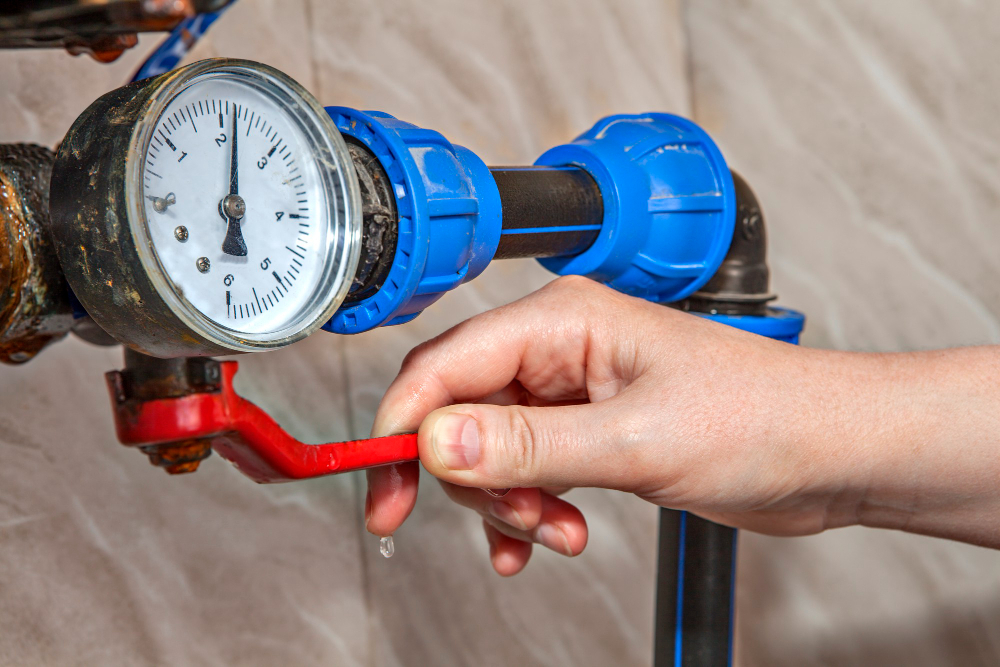
Main water line repair in Fairbanks AK is the kind of plumbing work most homeowners do not think about until something forces them to. The main water line runs underground from the municipal connection or well head to the house, and when it fails, nothing inside the home works the way it should. Pressure drops at every fixture, water discolors without explanation, or the yard develops a wet patch that has no business being there this time of year.
In this article, you will learn how to tell whether a pressure problem is in the house plumbing or the main line, what Fairbanks ground conditions do to buried pipe that most climates never test, what the signs look like after breakup when winter damage finally surfaces, how plumbers decide between a section repair and a full water line replacement, and why the cost of a summer inspection is a fraction of what an emergency call in January will run.
Through the topics below, you'll learn what your water line may already be telling you.
- The water pressure problem that affects every faucet is not inside the house
- Fairbanks frost and ground movement do things to buried pipe that most climates do not
- The signs homeowners notice after breakup point to damage that started months earlier
- Repair and water line replacement in Fairbanks depend on what the pipe looks like inside
- Waiting until the emergency water line repair call costs more than catching it early
Keep reading to understand the difference between a pressure issue you can ignore and one that means the main line needs attention before the damage spreads.
The water pressure problem that affects every faucet is not inside the house
When water pressure drops at a single fixture, the problem is usually a valve, a cartridge, or a supply line serving that fixture. When it drops everywhere at the same time, the issue is upstream of the entire house, and the main water line is the first place to look.
A single fixture losing pressure points to a valve but every fixture points to the main line
A kitchen faucet that loses pressure while the bathroom runs normally almost always has a localized cause. A partially closed shutoff valve, a clogged aerator, or a failing supply hose beneath the sink can all restrict flow to one fixture without affecting the rest of the system.
When every faucet, shower, and toilet in the house experiences reduced pressure simultaneously, the restriction is at a point that serves the entire home. That means the main water line, the main shutoff valve, or the pressure-reducing valve if one is installed.
A plumber diagnosing whole-house pressure loss starts at the main shutoff and works backward toward the street. If the pressure at the shutoff valve is already low, the problem is between that valve and the municipal connection, which places it in the main water line. A plumbing inspection focused on pressure measurement at multiple points isolates whether the issue is the line itself, the meter, or the municipal supply.
A sudden drop versus a slow decline tells the plumber two different things
The speed at which pressure decreases is diagnostic. A sudden drop, where the household goes from normal pressure to noticeably weak flow in a matter of hours, suggests a break or a major joint failure in the main line. Water is leaving the pipe through a new opening, and the volume reaching the house has decreased sharply.
A gradual decline over weeks or months points to a progressive restriction. This could be mineral scale building up inside the pipe, a slow leak that is getting worse as the opening expands, or ground movement that has partially compressed a section of the line.
What each pressure change pattern typically indicates:
- Sudden loss across all fixtures, especially with discolored water, points to a break or a major joint separation in the main line
- Gradual reduction over several weeks suggests mineral scaling, corrosion narrowing the internal diameter, or a slow leak that is diverting water into the ground
- Pressure that fluctuates throughout the day, strong in the morning and weak in the evening, can indicate a shared municipal supply issue rather than a private line problem
- Pressure that drops only when multiple fixtures run simultaneously may mean the main line diameter is too small for the household demand rather than a failure
Discolored water after the pressure changes suggests the main water pipe has shifted or cracked
When pressure loss is accompanied by brown, orange, or rust-colored water, the main water pipe has likely been physically disturbed. A crack, a joint separation, or a shift caused by ground movement can allow soil particles to enter the line.
In Fairbanks, where the soil contains a mix of silt, gravel, and organic material, even a small opening in the line introduces sediment that discolors the water and can clog fixtures, appliance valves, and water heater inlet connections.
Discolored water that clears after running the tap for several minutes may indicate a minor intrusion point. Water that remains discolored after extended flushing suggests a larger opening or a more significant structural failure in the pipe. Either scenario warrants professional evaluation to determine the scope of the main water pipe repair before the opening widens further.
Fairbanks frost and ground movement do things to buried pipe that most climates do not
The conditions that buried water lines face in Fairbanks are more severe than what the same pipe would experience in most of the continental United States. Frost depth, freeze-thaw cycling, and discontinuous permafrost create stresses that shorten the usable life of even properly installed water lines.
A four-foot frost line that pushes deeper in bad winters stresses joints other states never test
Building codes in Fairbanks require water lines to be buried below the local frost depth to protect them from freezing. In most years, the frost line in the Fairbanks area extends roughly four feet below grade. During exceptionally cold winters with minimal snow cover, frost penetration can push deeper.
A water line installed at the code-minimum depth may find itself within the freeze zone during a severe winter. Even if the line does not freeze solid, the expansion and contraction of the surrounding soil as it freezes and thaws places lateral and vertical pressure on the pipe and its joints.
This pressure, applied and released repeatedly over the course of a winter, fatigues joints and connection points. Copper lines with soldered joints, polyethylene lines with compression fittings, and older galvanized lines with threaded connections are all susceptible to this form of mechanical stress. The result is not always a clean break. It is often a slow loosening that develops into a leak over the following thaw season.
Freeze-thaw cycles crack the line in January but the leak often waits until spring
The same delay that affects interior pipes applies to the main water line. A crack or joint failure that occurs when the ground is frozen may not produce a visible leak until the surrounding soil thaws in spring.
While the ground remains frozen, the ice and compacted soil around the pipe can hold the opening shut or limit the volume of water escaping. As temperatures rise and the soil softens, the restraining pressure decreases and water begins flowing freely through the damaged section.
This is why many Fairbanks homeowners discover main line problems in April or May rather than in January when the damage actually occurred. A frozen pipe repair completed in winter addresses the immediate freeze event, but a follow-up evaluation after breakup is the only way to confirm that the line is structurally intact once the ground has thawed around it.
- A crack that forms under freeze pressure in January stays compressed by frozen soil until temperatures rise above freezing
- As the active layer thaws from the surface downward, the soil around the pipe loosens and the crack begins releasing water into the surrounding ground
- The leak may run for weeks underground before the volume is large enough to saturate the soil to the surface and produce a visible wet patch
- By the time the homeowner sees the wet spot, the escaping water has already softened the soil along the pipe trench, which can lead to further settlement and additional joint stress
Permafrost patches in the Tanana Valley shift underground water line repair into unpredictable ground
Fairbanks sits in the Tanana Valley, where permafrost occurs in discontinuous patches rather than as a continuous frozen layer. This means a water line may pass through unfrozen soil for part of its run and encounter a pocket of permafrost along another section.
Research from the University of Alaska Fairbanks Cooperative Extension Service documents how permafrost in the Fairbanks area exists in irregular patterns, and even minor surface changes can alter the thermal balance enough to initiate thaw in previously frozen ground.
When a leaking water line introduces warm water into permafrost-adjacent soil, it can accelerate localized thaw and cause the ground to settle unevenly beneath and around the pipe. This settlement puts additional stress on the line and can turn a single-point failure into a multi-joint problem.
Underground water line repair in areas with known permafrost involvement requires careful planning to avoid worsening the thermal disturbance. The plumber and, in some cases, a geotechnical evaluation must determine whether the repair approach will stabilize or further destabilize the ground conditions around the water line.
The signs homeowners notice after breakup point to damage that started months earlier
Most main water line failures in Fairbanks become apparent between late April and early June, when the ground thaws enough to release the water that has been escaping from a compromised pipe. Recognizing the signs early limits the scope of the repair.
A soggy spot in the yard once the ground thaws may be sitting directly over the line
A patch of saturated ground that appears in the yard after breakup, especially in a location that does not normally collect surface water, is one of the most reliable indicators of a main water line leak. The leaking water follows the path of least resistance through the thawing soil, and it often surfaces directly above or near the pipe trench.
In Fairbanks, where spring runoff and snowmelt can also create wet areas, the location of the wet patch relative to the known water line route is the key differentiator. If the saturated area follows a line between the meter pit and the house, the main water line is the likely source.
An unusually green or fast-growing strip of grass along the same path in early summer is another indicator. The escaping water provides moisture and, depending on the soil composition, dissolved nutrients that promote growth in the vegetation directly above the leak.
A water bill climbing without any change in use is the most common early signal
Before the wet patch appears, the water bill often tells the story first. According to the U.S. EPA WaterSense program, the average household wastes roughly 9,400 gallons per year from leaks, and households with significant leaks can waste fifty gallons or more per day.
A main water line leak can waste far more than that. A half-inch crack in a pressurized supply line can release hundreds of gallons per day into the surrounding soil without producing any visible sign at the surface until the ground is fully saturated.
Monitoring your water bill monthly is the simplest early-detection method available. Any increase that does not correspond to a change in household water use, seasonal irrigation, or an additional occupant should be investigated. The meter test that involves shutting off all fixtures and watching the meter for movement is the fastest way to confirm whether water is leaving the system between the meter and the house.
Gurgling at multiple fixtures when no water is running means air is entering the main
Gurgling sounds at faucets, toilets, or drains when no water is being used inside the house indicate that air is entering the supply system. In a closed pressurized system, air does not enter unless there is an opening.
A crack or a joint separation in the main water line can allow air to be drawn into the pipe, particularly during periods of fluctuating municipal pressure or when the leak point is above the water table. The air enters the system and travels to the highest point or the nearest open fixture, producing the gurgling sound.
Signs that air intrusion is coming from the main line rather than the drain system:
- Gurgling occurs at fixtures on different floors or opposite ends of the house, ruling out a single branch drain issue
- The sound happens when no fixtures are running and no appliances are cycling, which eliminates drain-related causes
- Sputtering or spitting from faucets when first opened, followed by normal flow, indicates air pockets trapped in the supply line
- The issue appears intermittently and correlates with temperature changes, which suggests the opening in the pipe expands and contracts with ground conditions
If air intrusion is accompanied by any of the other signs listed above, including pressure loss, discolored water, or an unexplained bill increase, the main water line should be evaluated promptly before the opening worsens.
Repair and water line replacement in Fairbanks depend on what the pipe looks like inside
The decision between repairing a section of the main water line and replacing the entire run depends on the pipe material, the extent of the damage, and the condition of the remaining line. A plumber uses diagnostic tools to make that determination before recommending a repair scope.
A camera inspection shows whether a section fix will hold or the full line needs replacing
A camera inspection of the main water line provides a visual record of the pipe's internal condition from end to end. The camera shows the plumber whether the damage is isolated to one section or whether the entire line shows deterioration that makes a spot repair unreliable.
A single crack caused by a freeze event in an otherwise sound line is a candidate for section repair. The damaged section is excavated and replaced, and the remaining line continues to serve the house. However, if the camera reveals widespread corrosion, multiple joint failures, or wall thinning throughout the run, a section repair would simply move the failure point to the next weakest spot.
The camera inspection is the step that prevents the homeowner from paying for a repair that will not last. It turns a guess into a decision supported by visual evidence.
Q: Can a camera go through the entire main water line from inside the house?
In most cases, yes. The camera is inserted at the main shutoff or a cleanout access point and advanced through the full run to the meter pit or well connection. The plumber records the footage for review and reference.
Q: Does the camera show the condition outside the pipe as well?
The camera shows the interior only. Exterior conditions, such as soil settlement around the pipe or root proximity, are evaluated separately through excavation or ground-penetrating assessment.
Q: How long does a camera inspection of the main water line take?
For a typical residential run of 50 to 150 feet, the inspection takes approximately 30 to 60 minutes, including setup and review of the footage.
Q: If the camera finds a problem, does the repair start immediately?
Not necessarily. The plumber presents the findings and recommends a repair scope. If excavation or material ordering is required, the repair is scheduled separately. Emergency situations may be addressed the same day.
Trenchless pipe bursting replaces the line without tearing up the entire yard
When full water line replacement is necessary, trenchless pipe bursting is an alternative to traditional open-cut excavation. The method involves pulling a new pipe through the path of the old one. A bursting head, slightly larger than the old pipe diameter, is pulled through the existing line, fracturing the old pipe outward into the surrounding soil while simultaneously drawing the new pipe into place behind it.
This method requires only two access points, one at each end of the run, rather than a continuous trench along the full length. In a Fairbanks yard where the water line runs beneath landscaping, driveways, or walkways, trenchless replacement preserves the surface and reduces restoration costs significantly.
Trenchless methods are not suitable in every situation. If the old pipe has collapsed entirely, if the route includes sharp bends, or if the ground conditions include large boulders or unstable permafrost, traditional excavation may be the only viable approach. The camera inspection and, in some cases, a utility locate help the plumber determine which method fits.
Full excavation costs more and only works once the ground thaws enough to dig
Open-cut excavation involves trenching along the full length of the water line, removing the old pipe, and installing a new one. This is the most straightforward method, and it gives the plumber full visual access to the pipe, the bedding material, and the surrounding soil conditions.
In Fairbanks, the constraint on full excavation is the ground itself. Frozen ground cannot be trenched with standard equipment. If a main water line failure occurs in winter, thawing the ground before digging adds time, equipment cost, and complexity to the project.
- Ground thawing may require steam injection, heated blankets, or mechanical methods that add several hours or days to the project timeline before any pipe work begins
- Winter excavation in frozen silt or gravel demands heavier equipment and more labor than the same dig in thawed summer soil
- Backfill material placed in winter may settle unevenly when it thaws in spring, requiring a follow-up visit to re-grade and compact the trench
- Any landscaping, walkway, or driveway surface removed during winter excavation cannot be fully restored until summer, leaving a temporary patch for months
A planned water line replacement during the summer construction season avoids every one of these complications and allows the work to proceed under the best possible conditions for both the installation and the site restoration.
Waiting until the emergency water line repair call costs more than catching it early
Every month a compromised main water line continues to operate is a month of additional water loss, ground saturation, and potential foundation or permafrost disturbance. The cost difference between a planned repair and an emergency response is significant.
A winter break means thawing frozen ground before anyone can even reach the pipe
When a main water line fails in December or January, the pipe is buried beneath several feet of frozen ground. The plumber cannot excavate until that ground is thawed, and thawing takes time and specialized equipment.
The household is either without water or operating on a temporary bypass while the thawing process runs. Emergency ground thawing is one of the most expensive components of a winter water line repair, and it is entirely avoidable if the problem is identified and addressed during the thawed months.
A main water line that shows any of the warning signs discussed earlier, pressure loss, discolored water, an unexplained bill increase, or a soggy patch in the yard, should be evaluated before the ground freezes. The same repair that takes a day in July may take a week in January, and every additional day adds cost.
Water running under the foundation between now and the repair date adds damage fast
A main water line leak that is left unaddressed does not pause while the homeowner waits for a convenient time to schedule the repair. Water continues escaping from the line 24 hours a day, saturating the soil along the pipe trench and potentially migrating toward the foundation.
In Fairbanks, where foundation systems are often designed around the thermal stability of the ground beneath them, introducing a continuous flow of water into the soil near or under the foundation can cause settlement, frost jacking, or permafrost degradation that produces structural movement.
The U.S. EPA notes that moisture intrusion into building materials that is not dried within 24 to 48 hours creates conditions for mold growth. A main line leak that sends water beneath the crawl space or along the foundation wall introduces moisture into the building envelope that may not be discovered until secondary damage has already developed.
A residential water line service visit in summer finds problems at half the cost of a winter emergency
A planned evaluation of the main water line during summer gives the homeowner every advantage. The ground is thawed, the plumber can excavate or access the line without thawing equipment, materials are readily available, and scheduling is not competing with the surge of heating emergencies that define the winter service calendar.
The cost savings of a summer plumbing inspection and repair versus a winter emergency call come from multiple factors.
- No ground thawing cost, which can represent a substantial portion of the total winter repair bill
- Standard excavation rates rather than emergency or after-hours labor premiums
- Full access to the pipe run for proper inspection, repair, and backfill under optimal conditions
- Immediate site restoration, including regrading, compaction, and surface repair, rather than a months-long wait for the ground to thaw and settle
- The ability to choose the repair method, whether trenchless or open-cut, based on what is best for the situation rather than what is possible given frozen ground
Homeowners who schedule a residential water line service visit after breakup and before the first hard freeze in fall give themselves the full window to address any issue the inspection reveals. Waiting until the line fails removes that choice entirely.
Conclusion
The main water line is the single pipe that connects every fixture in the house to its water source, and when it fails in Fairbanks, the consequences extend beyond lost water pressure. Ground saturation, foundation disturbance, permafrost degradation, and escalating water bills all follow from a line that is leaking underground where no one can see it.
The signs are often indirect. A pressure drop across all fixtures, discolored water, a bill that climbs without explanation, or a wet spot in the yard after breakup. Each of these is worth investigating before the ground freezes and the repair becomes an emergency that requires thawing, heavy equipment, and a compressed timeline.
A camera inspection, a pressure test, and a visual evaluation of the line route during the summer months give the homeowner the information needed to make a repair decision on their own schedule, at the lowest possible cost, and under the best working conditions Fairbanks offers. If you are noticing any of the signs described in this article, contact Prospector Plumbing & Heating to schedule a main water line evaluation while the ground is still accessible.
Licensed & insured Alaska plumbing and heating. Locally owned and operated! We're the happiest plumbers in Alaska and go the extra mile on every job!
Fairbanks
135 32nd Avenue
Fairbanks AK 99701
North Pole
North Pole, AK 99705
Mat-Su Valley
1712 N Williwaw Way
#1 Wasilla, AK 99654
Eagle River
AK 99577