
Hydro jetting benefits for Fairbanks drains with stubborn recurring blockages
If you have been dealing with the same slow drains or recurring backups in your Fairbanks home, you already know that the standard fix does not always hold. Snaking clears a path through the blockage, but the buildup on the pipe walls stays right where it is, and within weeks or months the same problem comes back. The hydro jetting benefits for Fairbanks drains go well beyond what conventional cleaning methods can deliver, especially in a climate and water environment that creates some of the most stubborn drain conditions in the country.
Interior Alaska's combination of mineral-heavy water, extreme cold, and seasonal ground movement puts residential drain systems under stress that most homeowners in the Lower 48 never deal with. Grease that congeals faster in cold pipes, mineral scale that builds up from hard well water, and root intrusions that exploit every crack and joint in an aging line all contribute to the kind of chronic blockages that keep coming back no matter how many times you run a cable through them.
Hydro jetting uses high-pressure water, typically between 1,500 and 4,000 PSI, to scour the full interior diameter of the pipe, stripping away buildup instead of just punching a hole through it. It is the difference between sweeping a path through snow and actually clearing the driveway. For Fairbanks homeowners dealing with drains that never seem to stay clear, it is often the first solution that actually lasts.
In this article, you will learn about:
- How hydro jetting works and what it does inside your pipes
- Why Fairbanks drain conditions make hydro jetting especially effective
- How hydro jetting compares to snaking and chemical cleaners
- When hydro jetting is the right choice and when it is not
- What to expect during a professional hydro jetting service
Keep reading to understand why high-pressure water cleaning is the most effective way to restore full flow to a Fairbanks drain system and keep it running.
How hydro jetting works and what it does inside your pipes
Hydro jetting is not a new or experimental technique. It has been a standard professional drain cleaning method for decades, used in residential, commercial, and municipal systems across the country. What makes it different from every other approach is the completeness of the clean. Instead of creating a channel through a clog, hydro jetting removes the clog and the buildup surrounding it, leaving the pipe walls as close to their original condition as possible.
Understanding how the process works helps explain why the results last so much longer than a conventional snaking job, and why it is particularly well suited to the conditions Fairbanks homeowners deal with.
The equipment and the process
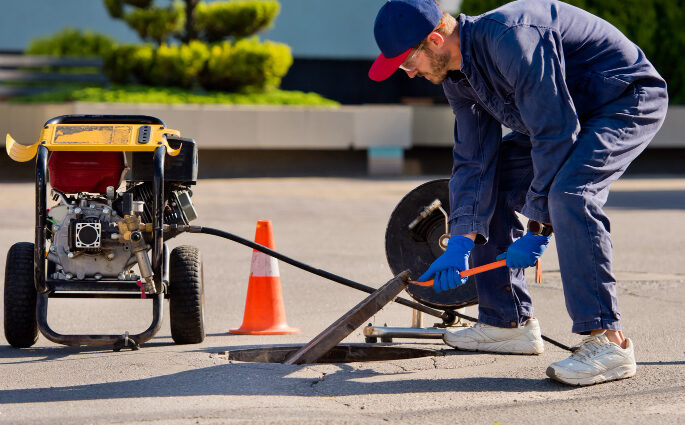
A hydro jetting system consists of a water tank, a high-pressure pump, a specialized hose, and a jetting nozzle designed to direct water in multiple directions simultaneously. The nozzle typically has forward-facing jets that break apart blockages and rear-facing jets that propel the hose forward through the pipe while scouring the walls behind it.
Here is how a typical residential hydro jetting service unfolds:
- A plumber performs a camera inspection to assess the pipe's condition, locate the blockage, and confirm the line can safely handle high-pressure cleaning
- The jetting nozzle is inserted into the pipe through a cleanout access point
- The pump pressurizes the water, typically between 1,500 and 4,000 PSI depending on the pipe size and the severity of the buildup
- The nozzle travels through the pipe, blasting debris off the walls and flushing everything downstream
- A follow-up camera inspection confirms the line is fully clear and the pipe walls are clean
The entire process usually takes one to two hours for a standard residential line. The camera inspections before and after are not optional extras. They are essential steps that protect your pipes and verify the results.
What hydro jetting removes
The reason hydro jetting outperforms every other residential drain cleaning method is the range of materials it can handle. A snake breaks through a single point of obstruction. Hydro jetting removes the obstruction and everything clinging to the pipe walls around it.
A single hydro jetting session can remove:
- Grease and soap scum that has hardened on pipe walls over months or years
- Mineral scale from hard water, including calcium and iron deposits common in Fairbanks well water
- Tree root tendrils that have entered through cracked joints, provided the roots are not too large
- Sand, silt, and debris that accumulate in lines with bellies or low spots
- Residual buildup left behind by previous snaking jobs that only cleared a channel
After jetting, the pipe interior is smooth and clean across its full diameter. That matters because buildup is self-reinforcing. A rough, scaled pipe wall catches new debris faster than a clean one. By restoring the pipe to a smooth condition, hydro jetting extends the interval before the next cleaning is needed.
Why Fairbanks drain conditions make hydro jetting especially effective
Every city has its plumbing challenges, but Fairbanks has a combination of factors that makes drain maintenance more demanding than average. The water is harder, the winters are colder, the ground moves more, and the pipes work under more stress. All of that creates conditions where conventional cleaning methods fall short and hydro jetting delivers its biggest advantage.
Understanding these local factors helps explain why so many Fairbanks homeowners cycle through repeated snaking jobs before discovering that hydro jetting is what actually solves the problem.
Hard water and mineral scale
Groundwater in the Fairbanks area carries elevated concentrations of dissolved minerals, including iron and calcium. The U.S. Geological Survey has documented that few wells in the Fairbanks area yield water with low hardness or low iron concentrations. Every gallon of that water that passes through your drain system leaves a trace of mineral residue on the pipe walls.
Over time, that residue builds into a layer of scale that narrows the pipe diameter and creates a rough surface that catches grease, soap, hair, and food particles. A snake can punch through a clog that forms on top of that scale, but it cannot remove the scale itself. The clog reforms because the underlying surface that caused it is still there.
Hydro jetting strips the mineral scale off the pipe walls, restoring the full diameter and the smooth surface. For homes on well water with no filtration system, this is the only cleaning method that actually addresses the root cause of recurring buildup.
Grease behavior in cold temperatures
Grease is a leading cause of drain blockages everywhere, but in Fairbanks it behaves differently than it does in warmer climates. Cooking fats and oils that enter the drain as liquid cool and solidify faster in cold pipes. During winter, when the ground around your drain line is frozen and pipe temperatures drop, grease that might stay soft enough to flow in a temperate climate hardens into a solid mass inside your line.
That mass bonds to the pipe walls and catches everything that flows past it. A routine drain cleaning with a cable can break through the grease plug, but the residue left on the walls rebuilds the plug within weeks. Hydro jetting emulsifies and flushes the grease completely, leaving nothing for new material to stick to.
For Fairbanks kitchens in particular, where winter means months of cold-pipe conditions, hydro jetting is the most effective way to reset a grease-laden drain line to full flow.
Freeze-thaw effects and shifting pipes
Fairbanks sits on ground that freezes deep and stays frozen for months. The University of Alaska Fairbanks Cooperative Extension Service notes that drain pipes can freeze at the first elbow below the soil surface and in areas where vehicle traffic compacts the ground over the line. When pipes freeze and thaw repeatedly, the joints shift, small cracks form, and low spots develop where water and debris pool.
Those low spots are magnets for recurring clogs. Debris settles into the belly of the pipe, and no amount of snaking can fix a grade problem. But hydro jetting can clear the accumulated material out of the low spot and restore flow, buying time until a more permanent repair addresses the pipe itself.
After a camera inspection reveals the location of shifted joints or bellies, a plumber can determine whether jetting alone will manage the problem or whether the pipe section needs repair or replacement. In many cases, regular jetting on a maintenance schedule keeps a line with minor grade issues functional for years.
How hydro jetting compares to snaking and chemical cleaners
Most homeowners try other solutions before they hear about hydro jetting. That is understandable. Snaking is cheaper up front, and chemical drain cleaners are available at every hardware store. But the comparison changes when you factor in how long the fix lasts, what it does to your pipes, and what it puts into the environment.
Each method has a place, but for recurring blockages in Fairbanks drain systems, hydro jetting is the only option that addresses the full problem rather than just the symptom.
Snaking: effective but limited
A drain snake, also called an auger, is a flexible cable with a cutting head that rotates inside the pipe to break through clogs. It is the most common tool plumbers use for simple, one-time blockages, and it works well for that purpose.
The limitation is what snaking leaves behind. The cable creates a channel through the obstruction, but the buildup on the pipe walls remains intact. For a one-time clog caused by a foreign object or a sudden grease dump, that is often good enough. For chronic blockages driven by mineral scale, grease accumulation, or root intrusion, snaking provides relief that lasts weeks or months before the same problem returns.
Here is a quick comparison of what each method does:
- Snaking punches a hole through the blockage and restores partial flow, leaving pipe wall buildup untouched
- Hydro jetting removes the blockage and scours the pipe walls clean across the full diameter, restoring near-original flow capacity
For Fairbanks homes where the problem keeps coming back, switching from repeated snaking to a single hydro jetting session often breaks the cycle entirely.
Chemical drain cleaners: risky and ineffective for serious clogs
Chemical drain cleaners are the most tempting option because they are cheap and easy. Pour them down the drain, wait, and hope the clog dissolves. The problem is that they rarely work on serious blockages, and they introduce real risks to your pipes and the environment.
Most commercial drain cleaners rely on caustic chemicals like sodium hydroxide or sulfuric acid to dissolve organic material. Those same chemicals corrode pipe walls over time, weakening joints and accelerating the deterioration of older metal pipes. For a Fairbanks home with cast iron or older galvanized drain lines, repeated use of chemical cleaners can actually shorten the life of the plumbing system.
The environmental concerns are equally real. The EPA highlights that certain chemical ingredients in household cleaning products can be toxic to aquatic organisms and contribute to water pollution when they enter the wastewater stream. In Fairbanks, where many homes are on septic systems, pouring caustic chemicals down the drain kills the beneficial bacteria that the septic system depends on to break down waste.
Hydro jetting uses nothing but water. There are no chemicals to corrode your pipes, no toxins entering the septic system or municipal wastewater stream, and no residue left behind. It is the most effective option and the most environmentally responsible one.
When snaking still makes sense
Hydro jetting is not always the right first step. There are situations where snaking is the faster, more practical, and more cost-effective choice.
A snake is usually the better option when:
- You have a single, one-time clog caused by a known object or a sudden grease event
- The pipe is very old, fragile, or in uncertain structural condition and has not yet been camera-inspected
- The blockage is in a small-diameter fixture drain rather than a main line
- You need immediate relief and a camera inspection has not yet been performed
The key distinction is the pattern. If the same drain keeps clogging despite repeated snaking, that is a clear signal that the walls of the pipe are the problem, not just the clog itself. That is when hydro jetting delivers results that snaking cannot match.
When hydro jetting is the right choice and when it is not
Hydro jetting is powerful, but it is not appropriate for every pipe in every situation. The high-pressure water that makes it so effective can also damage a pipe that is already structurally compromised. That is why a camera inspection before jetting is not just recommended. It is essential.
Knowing when to use hydro jetting and when to hold off protects your plumbing and ensures you get results that justify the investment.
Ideal candidates for hydro jetting
Hydro jetting works best when the pipe is structurally sound but internally dirty. That describes the majority of residential drain lines in Fairbanks homes built within the last 40 years, where the pipe material, usually ABS or PVC, is in good condition but the interior has accumulated buildup over years of use.
The best scenarios for hydro jetting include:
- Recurring clogs in the main sewer line that keep coming back after snaking
- Kitchen drain lines coated with hardened grease that restrict flow
- Main lines with root intrusion at the joints, where the roots are small enough to be cut and flushed by the water pressure
- Lines that need to be cleaned before a camera inspection, because heavy buildup obscures the view and prevents accurate diagnosis
- Preventive maintenance on lines that have a history of problems, performed on a schedule to keep the pipes clear before blockages form
For commercial properties like restaurants, laundromats, and multi-unit buildings, hydro jetting on a regular maintenance schedule, often every 6 to 12 months, is standard practice because of the volume and type of waste these lines handle.
When to choose a different approach
There are situations where hydro jetting is not the right tool. The camera inspection that precedes every jetting job is specifically designed to identify these conditions so the plumber can recommend an alternative.
Hold off on hydro jetting when:
- The camera reveals a collapsed or severely deteriorated section of pipe that cannot withstand water pressure
- The line has an extreme belly or sag where jetting would clear the debris but the grade issue would cause immediate reaccumulation
- The pipe is made of Orangeburg or another fragile material that would be damaged by high-pressure water
- The blockage is caused by a structural problem, such as a completely offset joint, that requires physical repair rather than cleaning
In these cases, the solution is sewer line repair or replacement, not cleaning. A good plumber will explain the camera findings, show you the video, and recommend the approach that actually fixes the problem rather than temporarily masking it.
What to expect during a professional hydro jetting service
If you have never had your drains hydro jetted, knowing what the process involves helps you prepare and helps you evaluate whether the plumber is doing the job thoroughly. A proper hydro jetting service is not a quick in-and-out visit. It is a diagnostic and cleaning process that takes care to protect your pipes while delivering a comprehensive result.
Here is what a professional service looks like from the homeowner's perspective.
Before the jetting starts
The plumber arrives and locates the cleanout access point for your main drain line. In Fairbanks homes, this is typically an accessible fitting inside the house, in the basement or utility area, or at an exterior cleanout near the foundation. If there is no cleanout, the plumber may need to access the line through a drain opening, which can affect the scope and cost of the work.
Before any water pressure touches your pipes, a camera goes in first. The video inspection serves two critical purposes. First, it confirms that the pipe is structurally sound enough to handle jetting. Second, it identifies exactly where the blockages are and what kind of material the plumber is dealing with, which determines the nozzle selection and pressure setting.
This step is non-negotiable. Any plumber who skips the camera inspection and goes straight to jetting is taking a risk with your pipes. Structurally compromised lines can rupture under pressure, and that turns a cleaning job into an emergency repair.
During the service
Once the inspection confirms the line is safe to jet, the plumber selects the appropriate nozzle and pressure setting for your pipe size and condition. Residential lines typically call for pressures in the 1,500 to 3,500 PSI range. The nozzle is fed into the pipe and water pressure is engaged.
You may hear the hum of the pump and the sound of water moving through the line. The process is louder than a typical plumbing service but not disruptive to the household. The plumber works the nozzle through the full length of the line, pausing at problem areas to ensure the buildup is fully removed.
A complete jetting pass on a residential main line usually takes 30 to 60 minutes, depending on the length of the run and the amount of buildup. For heavily scaled or grease-laden lines, the plumber may make multiple passes to ensure the walls are fully clean.
After the jetting
Once the line is clear, the camera goes back in for a post-jetting inspection. This verification step confirms that the buildup has been removed, the flow path is unobstructed, and the pipe walls are clean. It also gives the plumber a chance to identify any underlying conditions, like hairline cracks or early joint separation, that were hidden beneath the buildup and may need monitoring or future attention.
The plumber should provide you with a summary of the findings from both inspections, including:
- The condition of the pipe before and after jetting
- Any areas of concern that may need monitoring or future repair
- A recommended maintenance interval based on the type and severity of the buildup that was removed
- Video documentation you can keep for your records
For most Fairbanks homes, a single hydro jetting session followed by routine maintenance every one to two years is enough to keep the main drain line flowing without recurring blockages. Homes with particularly hard water or heavy kitchen usage may benefit from annual jetting to stay ahead of the buildup cycle.
Conclusion
Recurring drain blockages in Fairbanks are not a problem you have to live with. The hard water, cold temperatures, and ground conditions that make Interior Alaska tough on plumbing are also what make hydro jetting the most effective cleaning method for homes dealing with chronic slow drains and repeat backups. Unlike snaking, which clears a path through the problem, hydro jetting removes the problem entirely and leaves the pipe walls clean enough to resist new buildup for months or years.
The investment in a single hydro jetting service often pays for itself by eliminating the repeated snaking calls, the wasted money on chemical cleaners that do not work, and the frustration of watching the same drain slow down again a few weeks after the last fix. It is the kind of maintenance that solves the underlying issue rather than treating the symptom.
If your Fairbanks drains keep clogging despite repeated attempts to clear them, it is time to try something that actually works. Prospector Plumbing and Heating can inspect your drain system, identify the cause of the recurring blockages, and deliver a hydro jetting service that restores your pipes to full flow.
Licensed & insured Alaska plumbing and heating. Locally owned and operated! We're the happiest plumbers in Alaska and go the extra mile on every job!
Fairbanks
135 32nd Avenue
Fairbanks AK 99701
North Pole
North Pole, AK 99705
Mat-Su Valley
1712 N Williwaw Way
#1 Wasilla, AK 99654
Eagle River
AK 99577