

How to prevent summer plumbing problems in Fairbanks before costly repairs
When summer finally arrives in Fairbanks, most homeowners are thinking about the yard, the midnight sun, and everything they put off during the long winter. Preventing summer plumbing problems is rarely at the top of the list, and that is exactly why so many homes end up with burst lines, backed-up drains, and sewer surprises once the ground starts moving again.Summer in Interior Alaska is not gentle on plumbing. The ground thaws, shifts, and settles. Pipes that survived forty-below temperatures now face a completely different kind of stress. Water lines that looked fine in March can be leaking by June, and drains that ran slowly all winter announce themselves in a much bigger way once summer water usage picks up.The good news is that most of these problems have clear warning signs. Catching them early, before they turn into emergencies, is exactly what routine summer maintenance is for. This article breaks down the specific risks Fairbanks homeowners face when warm weather hits and gives you a practical checklist for getting ahead of repairs instead of reacting to them.In this article, you will learn about:
- Why summer is a high-risk season for plumbing in Fairbanks
- What the thaw season does to your water and sewer lines
- The drain and water heater checks every Fairbanks home needs
- How to read the warning signs before a small issue turns into a major repair
Keep reading to walk away with a clear plan for protecting your home's plumbing all summer long.
Why summer is a high-risk season for Fairbanks plumbing
Most homeowners assume winter is the only time they need to worry about plumbing in Alaska. That assumption gets expensive. Summer brings a completely different category of risk, and it catches people off guard precisely because the weather feels forgiving.The underlying issue is the ground itself. Fairbanks sits in one of the most permafrost-rich regions in North America. According to the Alaska Department of Fish and Game, roughly 85% of Alaska's land area is underlain by permafrost. When the active layer, the top portion of soil that thaws and refreezes each year, begins shifting in late spring, everything buried in it moves with it. That includes water lines, sewer laterals, and in older homes, drain pipes that were installed decades ago under conditions that no longer exist.Ground movement does not look like anything from the outside. But inside a pipe, even a small shift in angle or a slight separation at a joint can change everything. A drain installed at the correct slope years ago may now be running flat or slightly backward, creating the kind of persistent blockage that no amount of plunging will fix.
The hidden toll of freeze-thaw cycling
Every Fairbanks pipe has been through dozens of freeze-thaw cycles. Each one puts stress on joints, fittings, and the pipe material itself. Copper, PVC, and aging galvanized steel all respond differently, but all of them accumulate micro-damage over time that eventually adds up to a visible failure.The timing matters more than most homeowners expect. A pipe that was barely holding on through winter may finally give way when summer water usage increases, pressure fluctuates, or a warm stretch accelerates thaw in the soil around it. This is why summer repairs often feel sudden, even though the underlying damage has been developing for months or years.Older Fairbanks housing stock carries particular risk. Many homes in the area were built with galvanized steel supply lines that are now well past their intended service life. These pipes corrode from the inside out, restricting flow long before they fail outright, and the summer surge in demand is often what finally pushes them over.
Increased water use amplifies small problems
Summer is when Fairbanks households use more water. Outdoor hose connections get turned on. Landscaping and gardening draw from the system. Kids are home. Guests arrive. All of that added demand puts pressure on lines, valves, and fixtures that have been running at reduced load since fall.A small drip that was easy to ignore in January becomes a significant loss by July. The U.S. Environmental Protection Agency estimates the average American home leaks more than 10,000 gallons of water per year through minor drips and failures, and in a climate where every system runs under more strain than average, that number climbs fast. The combination of higher usage and accumulated winter stress is what makes early summer the most important time to get eyes on your plumbing.
What thaw season does to your water and sewer lines
The spring thaw is the single most stressful event of the year for underground plumbing in Fairbanks. It happens gradually, from the top down, and it produces a predictable set of problems that experienced technicians see every year once the ground opens up.Understanding what is happening underground helps you recognize the signs early, before a line fails completely or a slow leak turns into a flooded crawl space.
Water line damage from frost heave and soil movement
Frost heave, the upward movement of soil caused by ice expansion, can push buried water lines out of position over a single winter. When the ground settles back down in spring, those lines do not always return to where they were. A line that was buried at the right depth and angle may now have a low spot where water collects, a joint pulled slightly apart, or a section running through saturated soil that drains far more slowly than what surrounds it.The warning signs of a damaged water line often surface in summer:
- Unexplained drops in water pressure throughout the house
- Wet or unusually green patches in the yard with no obvious source
- A water bill noticeably higher than the same period last year
- Discolored water at the tap, especially first thing in the morning
- The sound of running water when all fixtures are off
Any one of these symptoms is worth a diagnostic visit. Waiting until the line fails completely means dealing with an emergency, and in Fairbanks, emergency repairs cost more and take longer to schedule than planned ones.
Sewer lateral stress after a long winter
The sewer lateral, the underground pipe that carries waste from your home to the main line, is one of the most vulnerable components in any Fairbanks plumbing system. It runs through the same frost-heave zone as your supply lines and is subject to the same ground movement risks.There is an additional problem specific to the Interior. A properly installed drain line requires a minimum quarter-inch-per-foot downward slope. When frost heave alters that pitch, a line that once ran correctly can end up running flat or slightly backward. The result is a pipe that drains slowly through fall and winter, then backs up entirely when summer water use goes up.Watch for these signals that your sewer lateral needs attention:
- Gurgling sounds from floor drains or toilets after heavy water use
- Slow drains in multiple fixtures simultaneously, a sign the problem is in the main line
- Sewage odors coming from lower-level drains
- Standing water near the cleanout in the yard
A camera inspection is the only way to know what is actually happening inside the pipe. A sewer camera run from the cleanout shows slope changes, root intrusion, and joint separations that no amount of snaking will permanently fix.
Drain slope failures in older Fairbanks homes
In older Fairbanks construction, drain lines were often installed with just enough slope to meet code under conditions at the time. Decades of freeze-thaw cycling and natural settling have shifted those slopes in ways that are invisible without a camera.This type of failure does not always announce itself as a dramatic backup. More often it looks like a drain that clears eventually but takes longer than it should, or a floor drain that holds a shallow pool of standing water after use. Over time, grease, soap residue, and debris accumulate in the low spots and the problem compounds slowly until it is no longer slow.
The drain and water heater checks every Fairbanks home needs
Summer is the right time for plumbing maintenance in Fairbanks, not just because of the weather, but because it puts you ahead of freeze-up. Problems found and fixed in June or July can be scheduled at a reasonable pace. Problems found in October are emergencies.These are the checks that matter most for Interior Alaska homes.
Inspecting and cleaning your main drain line
The main drain line handles everything. Keeping it clear and properly sloped is the difference between a home that drains normally and one that backs up every time the dishwasher and washing machine run at the same time.A professional drain cleaning visit before summer peaks accomplishes two things: it removes the buildup that accumulates over a winter of lower-than-average water use, and it gives a technician the chance to evaluate how the line is running and flag anything that needs a closer look with a camera.The three most common findings during a main drain inspection in Fairbanks homes are:
- Root intrusion from mature birch and spruce trees, which are aggressive in Interior Alaska soils and can penetrate older clay or cast-iron sewer lines within a few feet of the foundation
- Grease and organic buildup concentrated in low spots created by line settlement over multiple winters
- Joint separations or offset sections caused by frost heave, visible only with a camera
Clearing a partial blockage costs a fraction of what it costs to deal with a full backup. More importantly, it avoids the situation where a clog fails at the worst possible moment.
Checking your water heater before heavy use begins
Summer increases demand on your water heater. More showers, more outdoor cleanup, more guests. A unit that was barely keeping up through winter will show its limits quickly when summer demand spikes.Standard water heater maintenance at the start of summer involves checking the anode rod, the sacrificial metal component that prevents internal tank corrosion, flushing sediment from the bottom of the tank, and testing the pressure relief valve. Sediment buildup is a particular problem in Fairbanks because the water supply carries mineral content that settles at the bottom of a tank over time, acting as insulation between the heating element and the water.Signs your water heater needs attention before summer demand hits:
- Popping or rumbling sounds during heating cycles, a sign of significant sediment accumulation
- Water that takes longer than usual to reheat after a shower
- Rusty or discolored hot water at the tap
- A unit more than eight years old with no recent maintenance history
If you have a tankless water heater, the checklist is different but equally important. Inlet filters need cleaning, and descaling may be necessary depending on water quality and usage volume over the past year.
Testing outdoor water connections and hose bibs
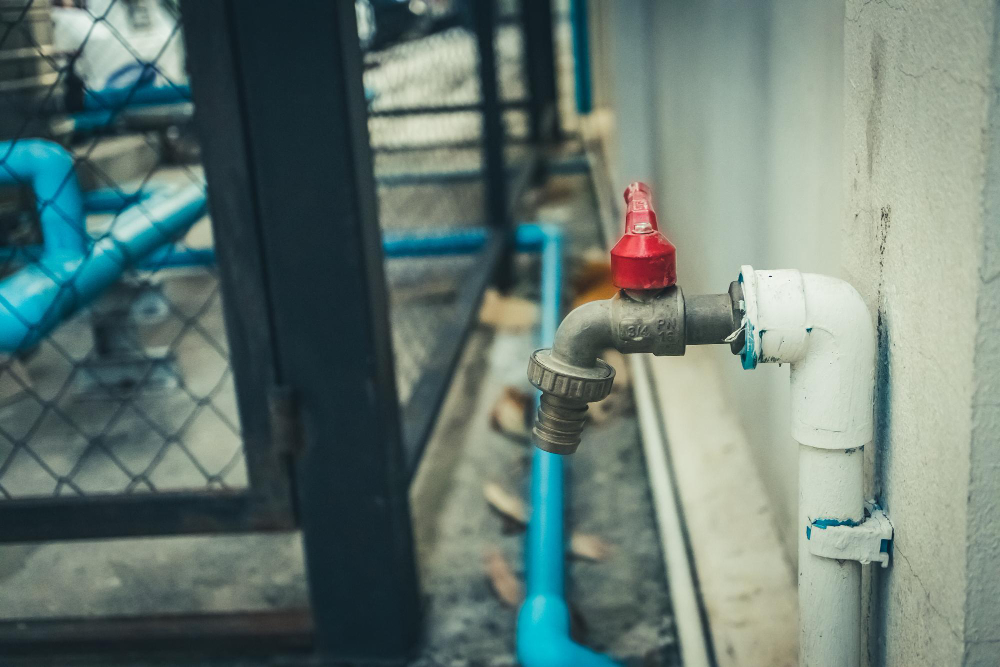
Outdoor hose bibs are often the first plumbing component to show freeze damage in spring. A frost-free bib that was not completely drained before winter may have a cracked internal tube that only becomes apparent when the water is turned back on in May.Turn on each outdoor connection and let it run for a full minute. Look and listen for:
- Water appearing inside the wall or around the exterior where the pipe enters the house
- Lower-than-normal pressure at the bib compared to indoor fixtures
- Dripping from the valve stem when the bib is fully shut off
A cracked hose bib that leaks inside the wall unnoticed all summer creates far more damage than the bib itself ever cost. Catching it during a plumbing inspection in May or June takes minutes.
How to read the warning signs before a small issue turns into a major repair
Most plumbing failures in Fairbanks homes do not happen without warning. The system gives signals, sometimes for weeks or months, before a problem becomes an emergency. Knowing what to look for is the difference between a planned repair and a crisis call.Water damage is one of the most expensive categories of home repair in the country. According to the Insurance Information Institute, water damage and freezing accounted for 22.6% of all homeowners insurance claims in 2023, with average payouts exceeding $13,000 per claim. In an Alaskan home where every repair involves longer scheduling windows and higher labor costs, catching problems early is not just sensible, it is financially necessary.
Pressure changes you should never ignore
Water pressure is one of the most reliable indicators of system health. Normal residential pressure typically runs between 40 and 80 PSI. Anything outside that range without an obvious external explanation warrants a call.Gradual pressure loss across the house is often a developing leak somewhere in the supply side. Identifying the source of plumbing leaks early matters because a slow supply-side leak can saturate insulation, rot framing, and cause structural damage over the course of a summer without ever producing a visible puddle. Sudden pressure loss, especially accompanied by the sound of running water in the walls, is more urgent and requires immediate attention.Homes on well systems in the Mat-Su Valley and outer Fairbanks areas can also experience low water pressure as a symptom of well output declining, a separate issue from pipe damage but one that shows up through the same symptom.
Slow drains: when to act and when to call
A slow drain in one fixture is usually a localized problem. Slow drains in multiple fixtures at the same time, or a floor drain that backs up when you run the kitchen sink, is a main line problem.The mistake most homeowners make is treating a slow main line with a consumer plunger or chemical drain cleaner, assuming it is fixed when the water starts moving again. Chemical cleaners can damage older plastic pipe and do nothing for the types of blockages most common in Fairbanks homes, namely root intrusion and settled-line accumulation. Hydro jetting clears those blockages completely rather than punching a temporary hole through them, and the results are visible through a follow-up camera pass.If a drain has been slow all winter and clears temporarily after treatment, that is a pattern. The underlying problem is still there. Get a camera inspection scheduled before it backs up completely and the repair becomes urgent.
Signs of underground water loss on your property
Leaks in buried water lines do not always make it inside the house. Some water escapes directly into surrounding soil and never reaches the foundation. Those leaks are harder to detect but no less damaging, since they can undermine the yard, create soft spots in frost-heave-prone soil, and waste significant water over the course of a summer.Watch for these property-level indicators:
- Patches of ground that stay soggy or mushy well after rainfall has dried elsewhere
- Grass or vegetation growing noticeably greener and faster in a linear strip, often following the buried supply line
- Low spots or depressions forming in the yard without a clear cause
- A water meter that continues moving when every fixture in the house is turned off
That last test is one of the most reliable checks a homeowner can do on their own. Turn off everything that uses water, including the refrigerator ice maker and any irrigation. Watch the meter dial for two minutes. Any movement means water is going somewhere, and if nothing is running, it is leaving through a pipe. An outdoor plumbing evaluation that includes a pressure and meter test can locate an underground leak in many cases without excavation.
Putting together a summer plumbing maintenance plan that actually works
One service visit a year is not enough to stay ahead of plumbing problems in a Fairbanks home. The climate, soil conditions, and age of Interior Alaska's housing stock make this a higher-maintenance environment than most of the country. But a consistent approach, done at the right time of year, catches the vast majority of problems before they escalate.Think of summer plumbing maintenance the way you think about a vehicle service. You do not wait for a warning light before checking the oil. You check it on a schedule because the cost of the check is a fraction of the cost of the repair.
What a summer plumbing visit should cover
A professional visit at the start of summer should be systematic, not just reactive. Ask for a thorough walkthrough rather than a spot fix.A complete visit covers:
- Water pressure reading at the main and at fixtures throughout the house
- Visual inspection of exposed supply and drain lines in the crawl space, mechanical room, and basement
- Anode rod and pressure relief valve check on the water heater
- Main drain cleaning or camera inspection depending on the home's age and history
- Outdoor hose bib and supply line testing
- Check of any heat tape installations for condition before next winter
This kind of visit takes a couple of hours and costs a fraction of a single emergency call. More importantly, it gives you accurate information about what your system actually looks like right now.
Prioritizing repairs when you find multiple issues
It is not unusual for a thorough inspection of an older Fairbanks home to surface more than one item that needs attention. The right approach is to triage, not panic.Address these first:
- Any active leak in a supply line, whether it is dripping now or shows evidence of past moisture
- Main drain lines with root intrusion or significant slope problems, since those can back up completely at any time
- Water heaters with visible corrosion or more than ten years of service without maintenance
Cosmetic issues and slow-moving problems can be scheduled at your convenience. Leaks and main sewer line blockages cannot wait. The goal is to know what your system looks like, understand what is urgent, and have a plan for everything else. That is what professional drain cleaning and regular inspection actually provide in a market like Fairbanks.
When to book your sewer and water line inspections
The best time to schedule a sewer inspection is early summer, before water use peaks and before existing problems are pushed to the point of failure. Waiting until fall means competing with every other homeowner who also put it off, and technician availability before freeze-up gets tight quickly.A sewer inspection is also worth prioritizing after any significant ground settling near the foundation, after an unusually active frost-heave winter, or if the home has not had a camera run in the last three to five years. In Interior Alaska, where frost heave is an annual event, that interval is realistic for homes with older lateral lines.If you are buying or selling a home in Fairbanks, a sewer scope is not optional. It is one of the most important inspections a buyer can request, and it is not included in a standard home inspection.
Conclusion
Summer is short in Fairbanks, and it goes fast. The last thing you want is to spend part of it dealing with a sewer backup, a failed water line, or a water heater that finally gave out. Most of those situations are preventable with a single proactive visit before the season gets into full swing.The homes that avoid expensive summer plumbing emergencies are not the ones with newer pipes or better luck. They are the ones whose owners pay attention to pressure changes, slow drains, and wet spots in the yard rather than waiting for a full failure to force their hand.If your plumbing has not been inspected since last fall, right now is the time. One visit, done before summer demand peaks, covers most of what goes wrong and gives you accurate information about everything else.Prospector Plumbing and Heating serves Fairbanks, North Pole, and the surrounding Interior Alaska communities with same-day service and upfront pricing. Call us to schedule your summer plumbing inspection and go into the season knowing exactly where you stand.
Licensed & insured Alaska plumbing and heating. Locally owned and operated! We're the happiest plumbers in Alaska and go the extra mile on every job!
Fairbanks
135 32nd Avenue
Fairbanks AK 99701
North Pole
North Pole, AK 99705
Mat-Su Valley
1712 N Williwaw Way
#1 Wasilla, AK 99654
Eagle River
AK 99577