

How to detect hidden plumbing leaks before damage spreads in Fairbanks
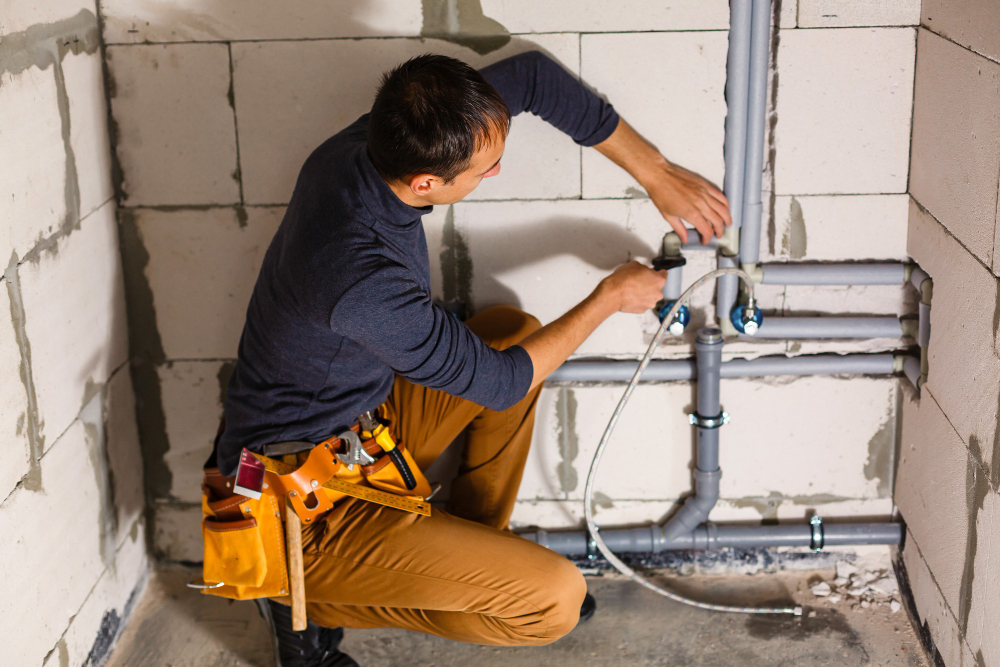
Hidden plumbing leaks are among the most expensive problems a Fairbanks homeowner can face, precisely because they are hidden. A supply line seeping behind a wall, a drain connection weeping at a joint inside a crawl space, a fitting that has been working loose for two winters — none of these announce themselves the way a burst pipe does. They develop slowly, damage quietly, and often go undetected long enough to cause structural damage that dwarfs the cost of the plumbing repair itself.Understanding how to detect hidden plumbing leaks in Fairbanks is worthwhile for every homeowner in the area, because the conditions here accelerate both the development of leaks and the damage they cause once active. Interior Alaska's extreme temperature cycles put constant stress on every connection in a plumbing system. A fitting that held tight through ten winters may begin to seep in the eleventh. A supply line that shifted during frost heave may not show visible wetness until months after the movement first opened a gap.The good news is that hidden leaks give off signals. Not always obvious ones, and not always immediately, but a homeowner who knows what to look and listen for can catch most of them before the damage has progressed past drywall into framing.In this article, you will learn about:
- Why hidden leaks develop faster and cause more damage in Fairbanks than in moderate climates
- The utility bill and meter checks that reveal active leaks without opening a single wall
- Visual and sensory signs inside the house that point to a concealed water source
- When professional leak detection is the right next step
Keep reading to build a systematic approach to finding hidden leaks before they find you.
Why hidden leaks are more costly in Fairbanks than national averages suggest
The national data on hidden plumbing leaks is already serious. According to the Insurance Information Institute, water damage and freezing accounted for 22.6% of all homeowners insurance claims in 2023, with average payouts reaching $15,400 per claim. Water damage ranks second only to wind and hail as the most common source of property insurance losses in the country.In Fairbanks, the compounding factor is what happens to that water once it enters a wall cavity, a crawl space, or a subfloor. The extreme temperature swings of Interior Alaska create freeze-thaw conditions inside building assemblies that accelerate the structural damage caused by moisture. A wall cavity with a slow drip in it does not just accumulate water damage the way a wall in a moderate climate does. It accumulates water damage, then cycles through freezing and thawing that expands and contracts the framing members, the insulation, and the sheathing, degrading each component faster than moisture alone would.The housing stock compounds the risk. Fairbanks homes built in the 1960s through the 1980s have supply and drain connections that are now 40 to 60 years old. Threaded connections in galvanized supply lines from that era rely on thread sealant that has been drying out for decades. Drain connections in older cast-iron pipe may have gaskets that have compressed to the point of failure. These are not speculative risks. They are aging systems operating in one of the most demanding plumbing environments in the country.
The detection gap: why hidden leaks go unnoticed so long
Research tracked by the insurance industry suggests that household leaks go undetected for an average of more than 75 days before a homeowner identifies them. The National Association of Insurance Commissioners notes that water damage is consistently among the most costly categories of homeowners insurance losses, with gradual hidden leaks often excluded from standard coverage because policies typically cover only sudden and accidental damage, not damage that accumulated over time without detection. In Fairbanks, where a significant portion of plumbing runs through insulated wall cavities designed to prevent freezing, that detection gap is not surprising. The insulation that protects pipes from freezing also conceals the moisture those pipes release when they begin to fail.A leak inside a well-insulated exterior wall may not produce any visible sign at the wall surface for weeks or months. The insulation absorbs the moisture, the vapor barrier behind the drywall slows surface saturation, and the homeowner sees nothing until the insulation is fully saturated and the moisture has nowhere to go but outward. By that point, the framing and sheathing behind the drywall may already need replacement.
Meter and billing checks that catch leaks without opening any walls
The water meter and the monthly bill are the most powerful hidden leak detection tools available to a Fairbanks homeowner, and neither requires any special equipment or plumbing knowledge to use.
The two-minute meter test
The meter test is the most reliable first step when a hidden leak is suspected but not located. The procedure is simple and takes less than five minutes.Turn off every water-using fixture and appliance in the house, including the refrigerant ice maker, any humidifiers, and irrigation systems. Find the water meter, which is typically in the mechanical room or near the main shutoff valve. Note the exact reading on the meter display or dial. Wait two full minutes without using any water anywhere in the house. Check the meter again.Any movement in the reading during those two minutes confirms that water is actively flowing somewhere in the system. If nothing is running, water is leaving through a leak. The test does not identify where the leak is, but it confirms that one is present and active, which is the decision point between monitoring and acting.Run this test under conditions that give it the best chance of catching a slow leak:
- Test at the same time of day each time so appliance cycles are predictable
- Confirm the refrigerator ice maker is off and has finished its last cycle before starting
- If on a well system, note whether the pump cycles on briefly during the two-minute window
- Run the test in both winter and summer, since some leaks only open under specific thermal conditions
For homes on well systems, a pump that cycles on briefly without any fixture being used is the equivalent signal. The pump is pressurizing the system to replace water that is escaping from a leak in the supply side.
Reading the billing trend for slow leaks
Not all hidden leaks are large enough to show clearly on a two-minute meter test. A very slow seep at a drain connection or a hairline crack in a supply fitting may lose only a few gallons per day, which a two-minute test may not capture reliably.Monthly billing trends catch these slower leaks over time. Pull the water bills from the past 12 months and compare month-to-month usage in gallons, not just dollar amounts, since rate changes can obscure the volume trend. Usage that has been climbing by 5 to 10 percent over several consecutive months without any corresponding change in household size, seasonal irrigation, or appliance additions is a pattern that warrants a leak investigation.Household leaks waste approximately 900 billion gallons of water annually across the United States, according to the EPA, and the average family wastes nearly 9,400 gallons per year from leaks alone — the equivalent of more than 300 loads of laundry. A bill that has been running 10 to 12 percent above the same period last year, with no obvious explanation, is a practical trigger for a professional water leak detection visit before the next billing cycle adds another month of loss.
Visual signs of a hidden leak inside the house
Once the meter or billing trend suggests a leak is present, a systematic visual inspection of the interior narrows down the location. Most hidden leaks leave traces at or near their source if the homeowner knows where to look.
Staining and discoloration on walls and ceilings
Water that has been seeping inside a wall cavity or through a ceiling assembly for weeks eventually saturates the drywall enough to show through the finish. The most common appearance is a yellowish or brownish stain that does not correspond to any visible surface source like a roof penetration or an exterior wall opening.Pay attention to:
- Ceiling stains in rooms below a bathroom, laundry room, or kitchen — supply and drain connections in those rooms are the most common source of leaks in multi-story homes
- Wall discoloration near supply shutoff valves, which are common leak points as valve stems age
- Baseboard discoloration or bubbling paint near the floor level, often indicating a drain connection leak that is releasing water at or near the subfloor
- Any new staining that appeared after a recent cold snap, which can indicate a supply line that experienced stress during a freeze-thaw cycle
Soft spots in flooring and wall surfaces
A floor that has a soft or springy feel in a specific area, particularly near a bathroom, kitchen sink, or utility room, suggests that moisture has been reaching the subfloor and degrading the structural panel beneath the finish flooring. Wood subfloor that has been wet long enough loses stiffness and eventually delaminates, producing the spongy sensation underfoot.Similarly, a wall surface that feels soft or slightly yielding to light pressure, rather than firm, indicates moisture saturation in the drywall. Drywall that has absorbed significant moisture loses its compressive strength and may feel almost spongy in the most affected areas.Soft subfloor and soft drywall mean structural material has already been compromised. The plumbing repair at that point is not the only work needed.
Musty odors in specific areas
A persistent musty smell in a specific room, closet, or section of the house that does not improve with ventilation is one of the most consistent indicators of concealed moisture. The smell is produced by microbial growth on wet building materials — framing, insulation, or drywall that has been damp long enough for biological activity to begin.In Fairbanks, where homes are tightly sealed against cold-weather infiltration, interior air does not exchange with outdoor air at the rate it would in a warmer-climate home. A musty odor that builds up in a tightly sealed Fairbanks house persists longer and concentrates more intensely than the same odor would in a house with higher natural ventilation. A musty smell in a specific room that the occupants have adapted to over months is a stronger signal than it might initially seem.The combination of a musty smell with any visual sign described above narrows the leak location significantly. A musty smell in a bathroom without any visible staining often points to a concealed leak at a drain connection inside the wall, where water has been wetting the framing but has not yet saturated the drywall enough to stain the surface.
Checking supply and drain connections in accessible locations
Many supply and drain connections in a Fairbanks home are accessible without opening walls, if the homeowner knows where to look. A systematic check of accessible connections is the next step after the meter test and visual inspection have established that a leak is likely present.
Under-sink and vanity cabinet inspections
The cabinet space under kitchen and bathroom sinks is one of the highest-probability locations for active leaks. The drain trap, the supply shutoff valves, and the flexible supply lines to the faucet are all located in this space. Each of these connections has a finite service life, and homes with original supply lines and shutoffs from the 1970s and 1980s may have components that are near or past failure.Open every under-sink cabinet and inspect carefully for:
- Any moisture on the cabinet floor or the back wall of the cabinet
- White mineral deposits (efflorescence) around threaded connections, indicating past or active seepage
- Discoloration or rust staining on the drain trap or supply shut offs
- Flexible supply lines that show bulging, cracking, or corrosion at the braided sleeve
A supply line braided sleeve that has developed a pinhole leak may not produce a visible drip at the time of inspection. The leak may only open fully during peak flow, such as when the dishwasher fills or when multiple fixtures run simultaneously. Mineral staining at the connection is the tell when the active drip is not visible.
Mechanical room and crawl space inspection
The mechanical room and crawl space contain the highest concentration of plumbing connections in most Fairbanks homes. The water heater, the main supply distribution, the boiler or furnace connections to domestic hot water, and any sump or ejector equipment all live in this space, and it is a space that many homeowners do not visit between maintenance calls.A crawl space or mechanical room inspection that is part of a regular plumbing inspection routine covers:
- Water heater connections — both supply and discharge, including the T&P valve drain line
- Main supply distribution manifold, if present, checking each shutoff and its supply branch
- Any visible drain lines in the crawl space for signs of joint seepage or hanging moisture
- The condition of pipe insulation on any lines running through unheated space
- The crawl space floor and wall surfaces for moisture staining or biological growth
A crawl space that shows white efflorescence on the concrete walls, moisture staining on the soil below plumbing lines, or biological growth on framing members has been accumulating moisture from somewhere. A technician doing a sewer inspection in the crawl space as part of the diagnostic visit can often identify the source visually from the access point without opening walls.
Checking hose bibs and outdoor connections
Outdoor supply connections in Fairbanks are a common hidden leak source because they are out of sight most of the year and because the freeze-thaw stress on exterior wall penetrations is higher than on interior connections.A frost-free hose bib that was not fully drained before the prior winter may have a cracked internal tube that only becomes apparent when the water is turned on in spring. The crack may release water inside the wall rather than at the exterior, and the homeowner may see no sign until internal moisture has been accumulating for weeks.Check each outdoor supply connection by turning it on and watching both the exterior flow and the interior wall surface near the penetration simultaneously. Any sound of water movement inside the wall during outdoor fixture operation, or any moisture appearing at the interior drywall surface near the penetration, points to a supply line connection that is leaking inside the wall assembly. Homes with outdoor plumbing concerns visible at the exterior often have related issues inside the wall that are not visible without investigation.
When professional leak detection is necessary
The homeowner inspection steps described in this article catch many hidden leaks before they require professional equipment. But there is a category of leak that does not produce visible surface signs within the timeframe that matters, and for those leaks, professional detection equipment is the only reliable approach.
Acoustic and pressure leak detection
Professional plumbing leak detection uses acoustic listening equipment and pressure testing to find leaks in buried or enclosed supply lines without excavation or wall opening. A technician pressurizes the supply line to a controlled pressure, watches for pressure decay over a defined period, and uses a ground microphone or contact sensor to listen for the specific frequency signature of water escaping under pressure from a pipe.This approach locates leaks within a few feet, which means excavation or wall opening is targeted rather than exploratory. The cost of a professional leak detection visit is a fraction of the cost of opening walls in multiple locations to search for a leak by direct inspection.Professional detection is the right next step when:
- The meter test confirms an active leak but no source is found during the interior inspection
- Billing trends point to a slow leak but no surface signs are visible in accessible areas
- A crawl space or mechanical room inspection shows moisture signs but no obvious source
- The house has had recurring unexplained increases in water consumption over multiple seasons
Camera inspection of drain lines
A supply-side leak is not the only category of hidden plumbing problem that causes damage without visible surface signs. A drain line that has a cracked joint or a separated fitting inside a wall or under the slab releases drain water into the surrounding structure every time a fixture is used. Drain water does not show pressure-test results the same way supply-side leaks do.A camera inspection of the drain lines, run from cleanout access points, reveals cracks, joint separations, and areas where biological growth or scale suggests chronic moisture in the line. In Fairbanks homes where frost heave has displaced drain lines over decades, a camera inspection that shows sections running at reduced slope or with joint offsets identifies both the active problem and the structural reason it is recurring.Pairing a camera inspection with a pressure test of the supply side covers both the hidden supply leak and the hidden drain leak categories in a single diagnostic visit, which is the most efficient way to get a complete picture of what is happening inside the walls before committing to a repair plan. For homes with aging infrastructure throughout the supply and drain systems, this kind of comprehensive baseline inspection is worth doing every five to seven years as a standard maintenance item rather than only after a leak has already announced itself.
Conclusion
Hidden plumbing leaks in Fairbanks homes rarely announce themselves cleanly. They show up as a billing trend that crept up over three months, a faint musty smell in the back bedroom that comes and goes, a ceiling stain that appeared after a cold snap and has not grown since. Each of these is the system doing its best to signal that something is wrong before the damage becomes structural.The homeowner who runs the meter test in spring, checks under-sink connections once a year, and calls a professional when the billing trend does not explain itself is not being paranoid. They are being realistic about what it costs to fix a hidden leak caught in week two versus week twenty.Prospector Plumbing and Heating serves Fairbanks, North Pole, and the surrounding Interior Alaska communities with same-day service and upfront pricing. Call us to schedule a leak detection visit and find out what is actually happening inside your walls before the damage decides the conversation for you.
Licensed & insured Alaska plumbing and heating. Locally owned and operated! We're the happiest plumbers in Alaska and go the extra mile on every job!
Fairbanks
135 32nd Avenue
Fairbanks AK 99701
North Pole
North Pole, AK 99705
Mat-Su Valley
1712 N Williwaw Way
#1 Wasilla, AK 99654
Eagle River
AK 99577